Market Fresh: France’s Seasonal Produce for Autumn and Winter
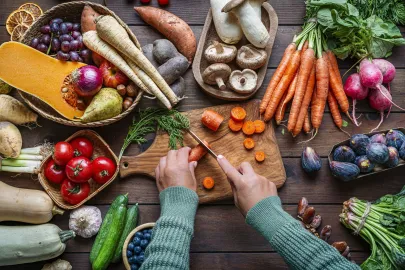
Lots of people find autumn and winter markets a little sad. Personally, I don’t. Sure, the beautiful colourful tomatoes are gone, but in France they are replaced by squash, deep green cabbages, carrots in every colour, leeks and heritage vegetables with really interesting flavours. And on the fruit side, there are apples, which go into my favourite dessert, tarte Tatin, and the first Corsican clementines.

And when I see all these fruits and vegetables, my head fills up with ideas for comforting French dishes. So if you’re not quite sure yet how to choose and cook autumn and winter produce, let me show you how we pick and prepare them in France. And for even more tips, check out the interview with MOF Primeur (Best Grocer Craftsman of France) Éric Fabre on the understated charm of winter fruit and vegetables.
Leeks
I can’t imagine winter without leeks. In France, they are mainly grown in Normandy,
Hauts-de-France and around Nantes. You’ll find them from September to April, and they
are the base of so many recipes: soups, quiches, leek fondue, the list goes on.

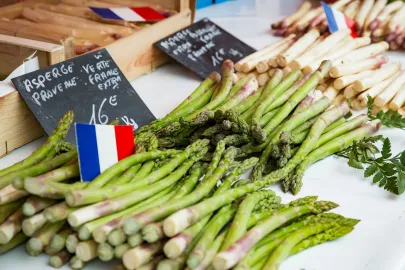
💡 Did you know? In France, the leek is nicknamed “the poor man’s asparagus”. And served warm with a good vinaigrette, it really has nothing to envy!
To choose a good one, look for a leek that is nice and white, long and firm, with fresh
green leaves, neither limp nor yellow. To clean it properly, slice it lengthwise and rinse it under running water, fanning out the leaves. Leeks keep for one to two weeks in the vegetable drawer of the fridge. You can wrap them in a damp cloth to keep them fresh even longer.


Multicoloured Carrots
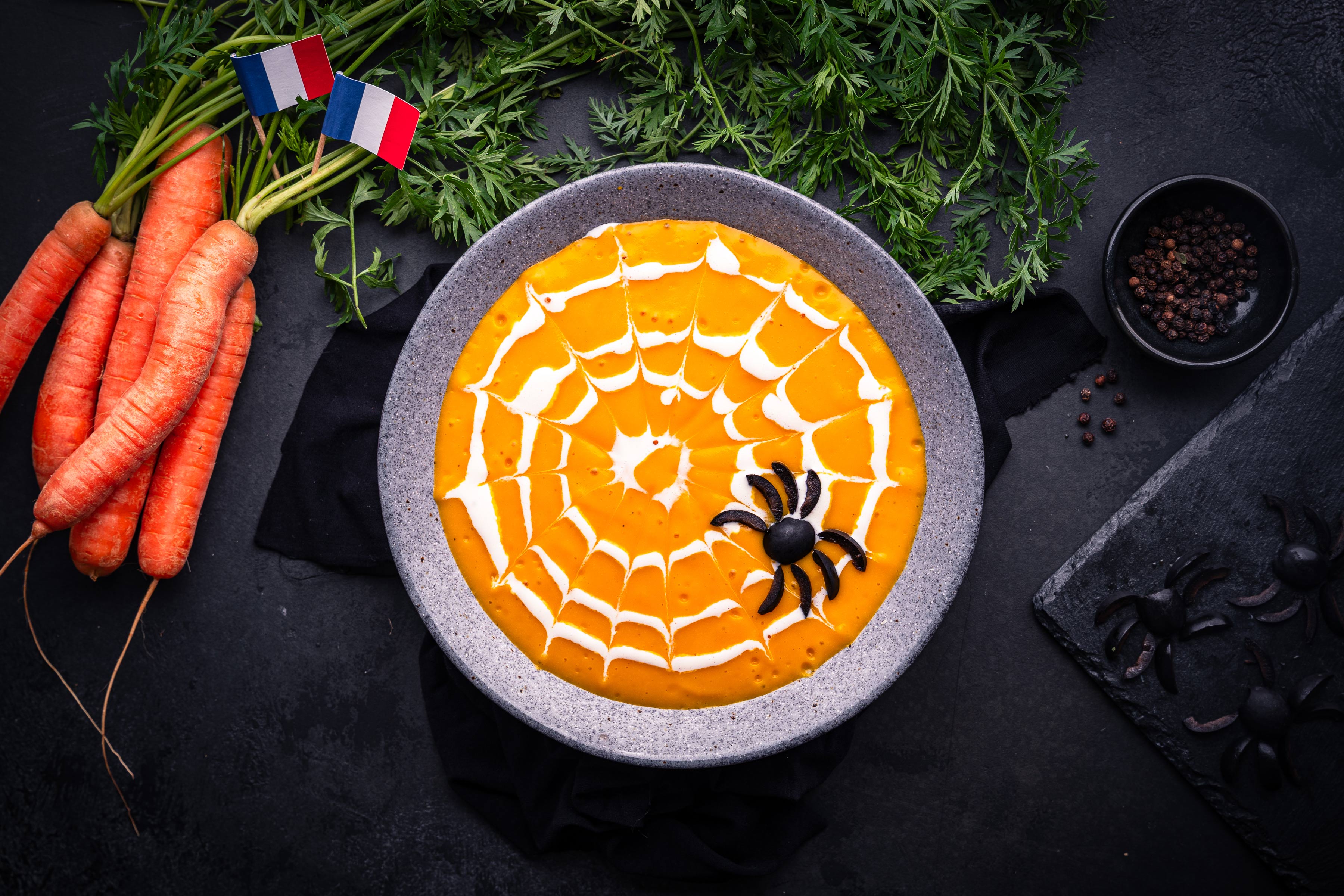
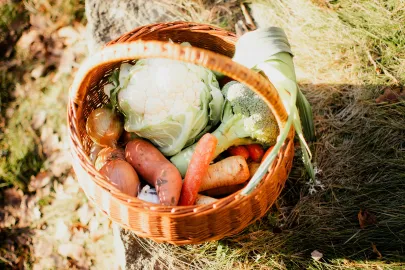
Orange, purple, yellow or white: multicoloured carrots are a great way to bring colour to your plates in winter. In France, they are mainly grown in Normandy (in the Val de Saire and Créances) and in the Landes, on sandy soils that give them a particularly sweet flavour. The harvest peaks from October to December.

💡 Did you know? Carrots weren’t always orange! The first ones were white, purple or yellow, and the orange carrot only appeared in the 17th century in the Netherlands, by crossing different varieties.
To choose good carrots, they should be firm, smooth and brightly coloured. If they come with their tops, have a look at them: they should be nice and green. That’s the MOF Primeur’s tip for spotting really fresh carrots. Cut the tops off when you get home, otherwise they tend to draw moisture out of the carrot. And if your carrots start to go soft, put them in a container filled with water and back in the fridge: after 24 hours, they’ll be firm again.
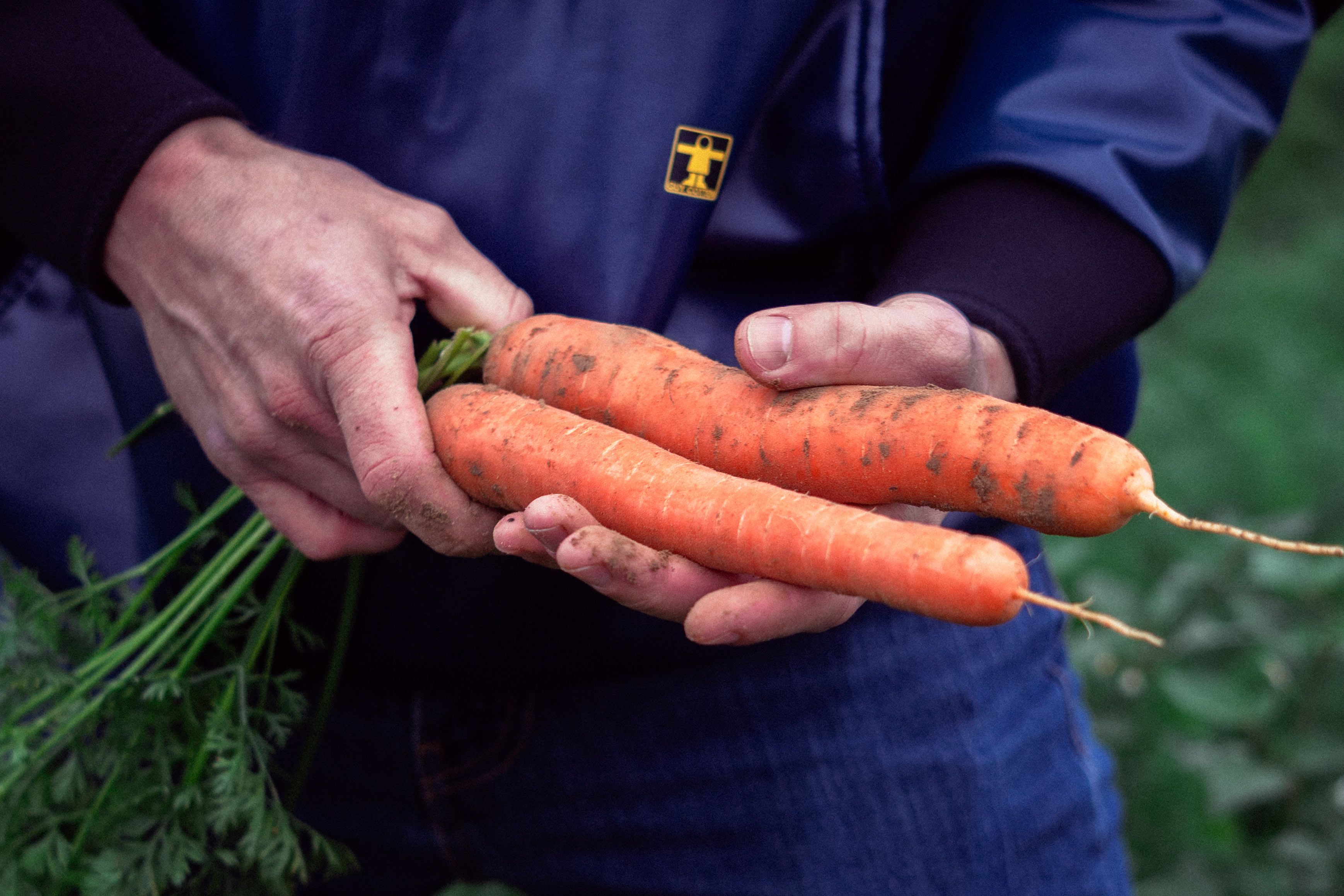
One more tip: to keep the lovely colour of purple carrots, roast them rather than boiling them, as they lose their colour in water.

Cauliflower
Most French cauliflower comes from Brittany, the country’s leading production region.
You’ll find it on the stalls from autumn right through to spring.

💡 Did you know? Its large green leaves are actually there to protect it from the sun, and that’s what keeps it so white.
A good cauliflower feels heavy and is nice and white, with tight florets, no dark spots
and green leaves. It keeps a few days in the fridge with its leaves on.
My tip: roast it instead of boiling it. It’ll have much more flavour, and you’ll avoid that cabbage smell in the kitchen that not everyone loves.


Heritage Vegetables: Jerusalem Artichoke, Parsnip and Chervil Root
Long forgotten, heritage vegetables (légumes anciens) like Jerusalem artichoke, parsnip and chervil root are making a big comeback at markets and in restaurants. And that’s a good thing, because they are delicious and very good for you! They are in season from October to March and are mainly grown in Brittany, the Loire Valley and the North of France.
The Jerusalem artichoke has a nutty flavour that reminds me of artichoke hearts. This vegetable had a bad reputation for a long time: during World War II, people ate it instead of potatoes, along with swede, and after the war a whole generation didn’t want to eat it anymore.
The parsnip looks like a big white carrot. It’s sweet, with nutty notes and a slightly spicy touch, and it gets even sweeter after the first frosts. Go for small and medium-sized parsnips: the bigger they are, the more fibrous they tend to be.
Chervil root is a Loire Valley speciality, with a delicate flavour somewhere between
chestnut and potato. It is harvested in summer and then kept in the cold for a few weeks while it develops its sweetness.
My tip: steam it with the skin on, then peel it. Much easier.
Apples
The apple is France’s favourite fruit, and there’s a variety for every taste: tart, sweet, crisp or melting. It’s grown all over France, especially in the Limousin, the Loire Valley, the South-East and the South-West. It’s harvested from August to November, and you’ll find it on the stalls all winter long.

💡 Did you know? The Pomme du Limousin was the first apple in France to get an AOC, now an AOP.
Choose apples that are firm, smooth-skinned and free of bruises, with a lovely
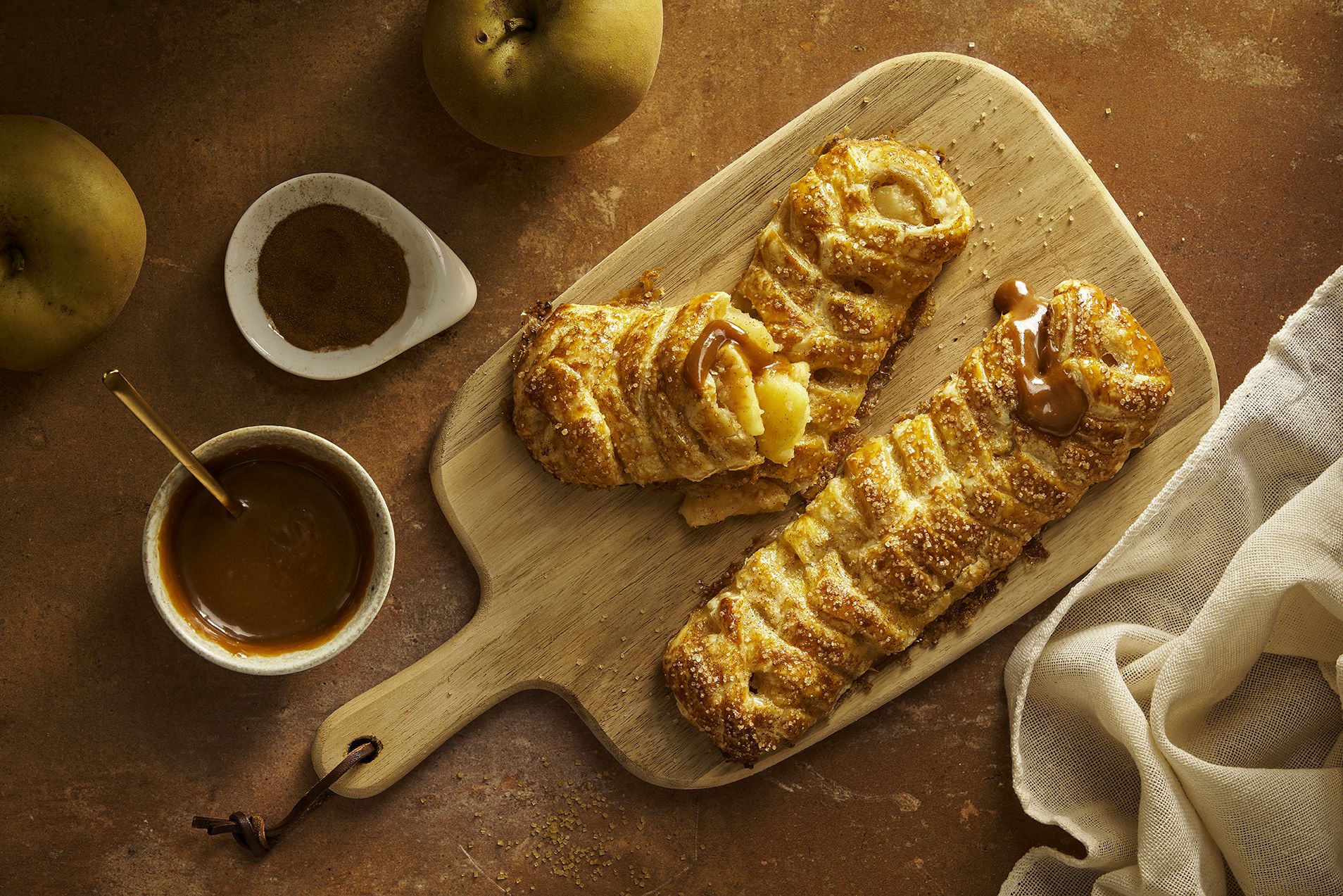
fragrance. Keep them somewhere cool or in the fridge, but away from other fruit, as they release ethylene, a gas that makes everything around them ripen faster. In the kitchen, the apple is clearly THE queen of autumn desserts: in tarts, crumbles, baked or in cakes.


Pears and Kiwi
Williams, Conférence, Comice, Passe-Crassane: French pears mainly come from the
Loire Valley, Rhône-Alpes, Provence and Savoie, and you’ll find them from August to
March. To check if a pear is ready, press gently near the stalk: it should give slightly.


💡 Did you know? Pears are picked before they are ripe and finish ripening off the tree. If they were left on the branch, their flesh would become too grainy. As for kiwis, they’re packed with vitamin C: just one covers a good part of your daily needs.
French kiwis mostly grow in the South-West. The Kiwi de l’Adour even holds both an IGP and a Label Rouge. Their season runs from November to April. To check if a kiwi is ripe,press it gently: the flesh should give slightly. If your kiwis are too firm, put them in a bag with an apple: it speeds up ripening a little, and they’ll be ready in two or three days. The two fruits are a perfect match in a frozen bûche for the holidays, and pears are delicious in savoury dishes, with cheese.


Corsican Clementines
For me, the arrival of Corsican clementines is the real sign that winter is here. It’s the
only French clementine, protected by an IGP, and you’ll find it from November to
February.
💡 Did you know? IGP Corsican clementines receive no chemical treatment after harvest, so you can use the zest in your cakes too.
To choose them, look at the leaves: they should be bright green and glossy, a sign they were picked recently. The fruit should feel heavy, that’s how you know it’s nice and juicy. They keep for up to two weeks, ideally in the vegetable drawer of your fridge or at room temperature in a cool, dry place.
Chestnuts and Walnuts
When fresh chestnuts arrive, that’s it: autumn is really here. In France, the Ardèche is the leading production region, home to the Châtaigne d’Ardèche AOP, but you’ll also find chestnuts from the Cévennes, Corsica and the Limousin. Their season runs from October to December.
💡 Did you know? The chestnut tree used to be called “the bread tree”: chestnuts were dried and then ground into flour to make bread and soup.
Choose chestnuts that are shiny and heavy, with a tight shell and no tiny holes.
And my most important tip: always score the flat side before roasting, or they’ll burst.
As for walnuts, France has two AOPs: the Noix de Grenoble and the Noix du Périgord. The Noix de Grenoble was even the first fruit in France to get an AOC, back in 1938. Fresh walnuts are in season in September and October, then dry walnuts take over all winter. Choose heavy ones with a clean shell, and once shelled, keep them in the fridge so they don’t go rancid.


Learn more about French fruit and vegetables for autumn and winter
To be sure of the quality, nothing beats an expert’s advice, especially from a MOF
Primeur (Meilleur Ouvrier de France, a distinction of excellence for fruit and vegetable
merchants). If you want to learn how to choose your fruit and veg like a pro, check out
the “Ask the Expert” series.
And when you shop, look for the “Origine France” label: it’s a guarantee of short supply chains, respected seasonality and real flavour. I hope these little tips help you fill your basket, even in the depths of winter. Bon appétit!
Contributor

La Cuisine de Géraldine
Food Blogger
Tags
On the same subject
THE FRENCH PANTRY
Market Fresh: France’s Seasonal Produce for Autumn and Winter
In partnership with Fruit and Veg from France
THE FRENCH PANTRY
Market Fresh: France’s Seasonal Produce for Spring & Early Summer
In partnership with Fruit and Veg from France
Most popular this week