In the Ardèche, chestnuts continue to fly off the shelves... and constantly reinvent themselves
Maison Sabaton has processed chestnuts in the Ardèche region for over a century. Founded in 1907, this French family business preserves a unique, artisanal savoir-faire, rooted in the soil and history of the region. We spoke with the man who cultivates this exceptional fruit, Anatole Sabaton.


In the heart of the Ardèche, Maison Sabaton has upheld a tradition defined by flavour and patience for over a century. Very little here has changed since 1907. At 28 years of age, Anatole Sabaton represents the fourth generation to helm this family company, now a leading name in France’s chestnut processing industry.
The renaissance of a forgotten fruit
For many years, chestnuts were the staple food product for those living in the Ardèche. On this hilly terrain, unsuitable for large-scale farming, the chestnut tree was an answer to people’s prayers given its hardy, low-maintenance nature and ability to flourish on poor soil. Chestnuts would be dried, ground into flour and used for making soup or bread.
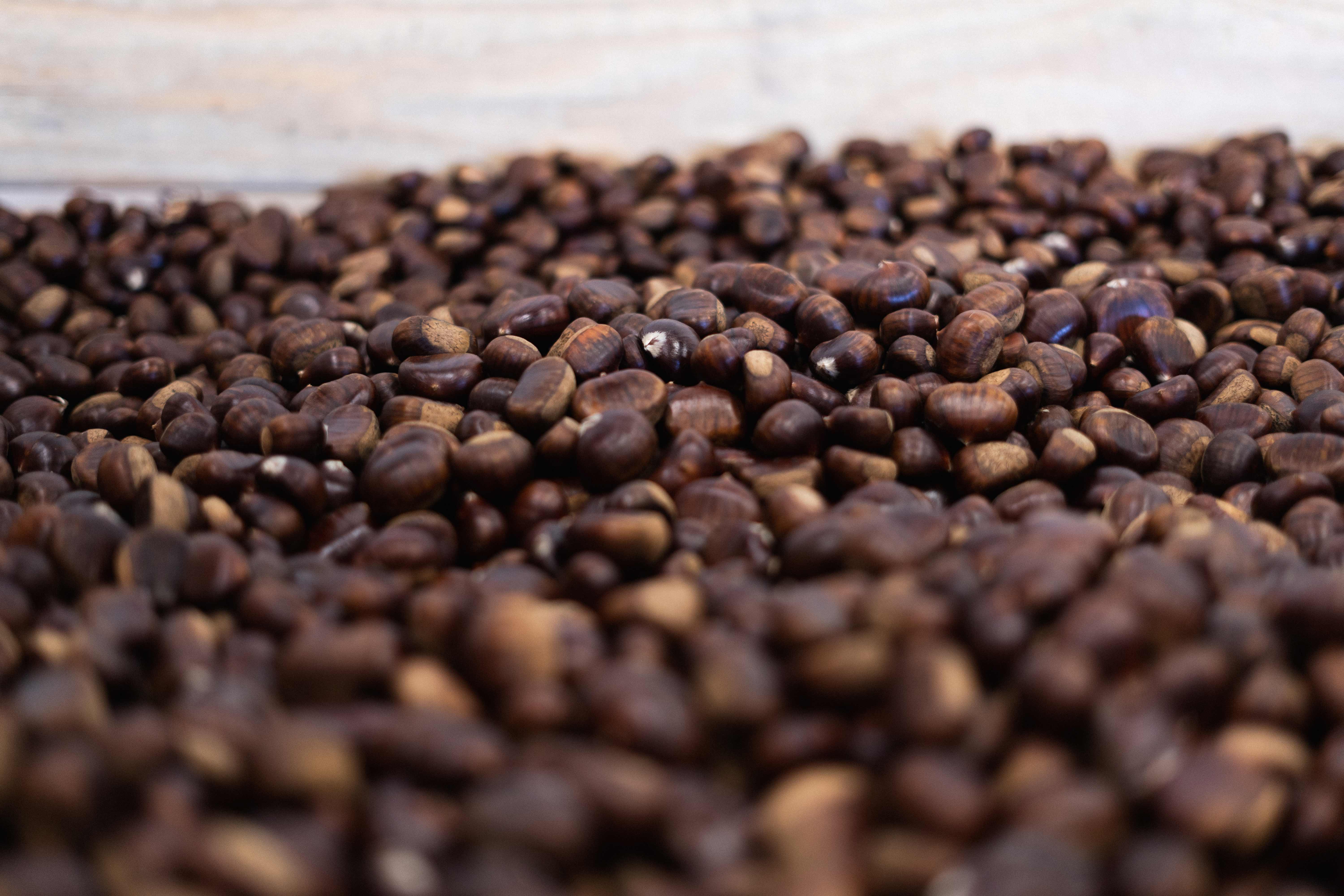
But with the subsequent rural exodus and changes in lifestyle, chestnuts fell out of favour. It took until the 2000s for the fruit to reclaim its prestige. “Gaining AOC then AOP status in 2014 marked a turning point,” explains Anatole Sabaton. “The Ardèche department has since re-emerged as France’s leading producer. This recognition has given the whole industry a huge confidence boost and generated a lot of enthusiasm for the product.”
Today, the Ardèche AOP chestnut has become a symbol of resilience and identity. Behind the certification, there are men and women who are sustaining this living heritage, at the crossroads between tradition and innovation. Maison Sabaton plays a key role in this resurgence by sourcing exclusively from local producers.
The chestnut tree, a symbol of sustenance and regional landmark
Across the Ardèche countryside, chestnut trees are much more than just a fruit tree, embodying an enduring presence, woven with sentiment. They grow on hilly slopes, on the outskirts of hamlets, and sometimes in the middle of woodland. Their gnarled trunks and dense leaves bear witness to centuries of rural life. “The chestnut tree has always been part of the landscape here,” says Anatole. “It is a robust tree variety that needs minimal water and can adapt to challenging conditions. It has fed entire generations.”
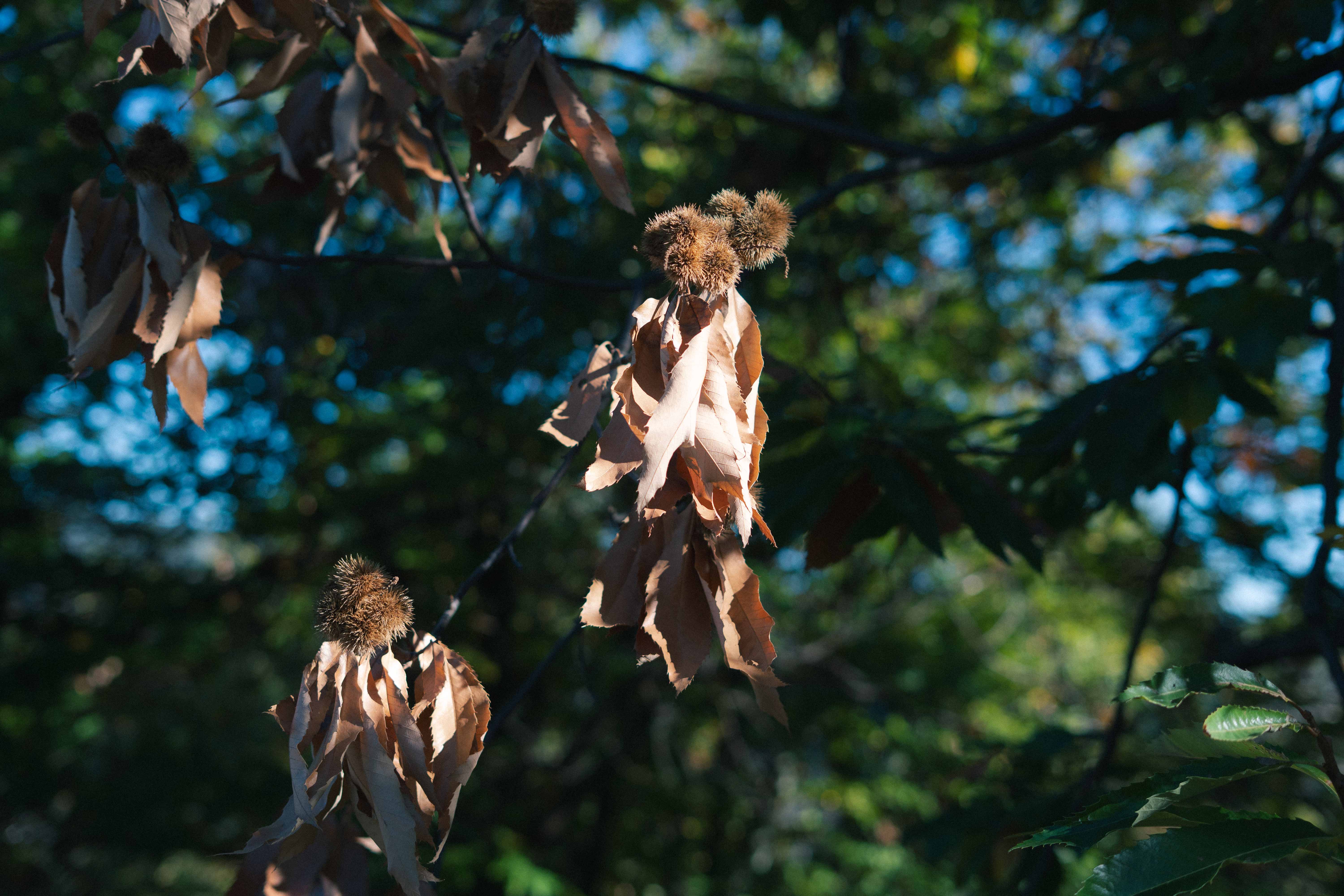
Previously known as ‘the bread tree’, it has come to symbolise the mountainous Ardèche region through its ability to thrive on rugged terrain. To this day, the fruit is still seen as a vital source of nourishment, but has also become synonymous with eating for pleasure and is celebrated in desserts, confectionery and fine dining alike.
The harvest, a traditional skill
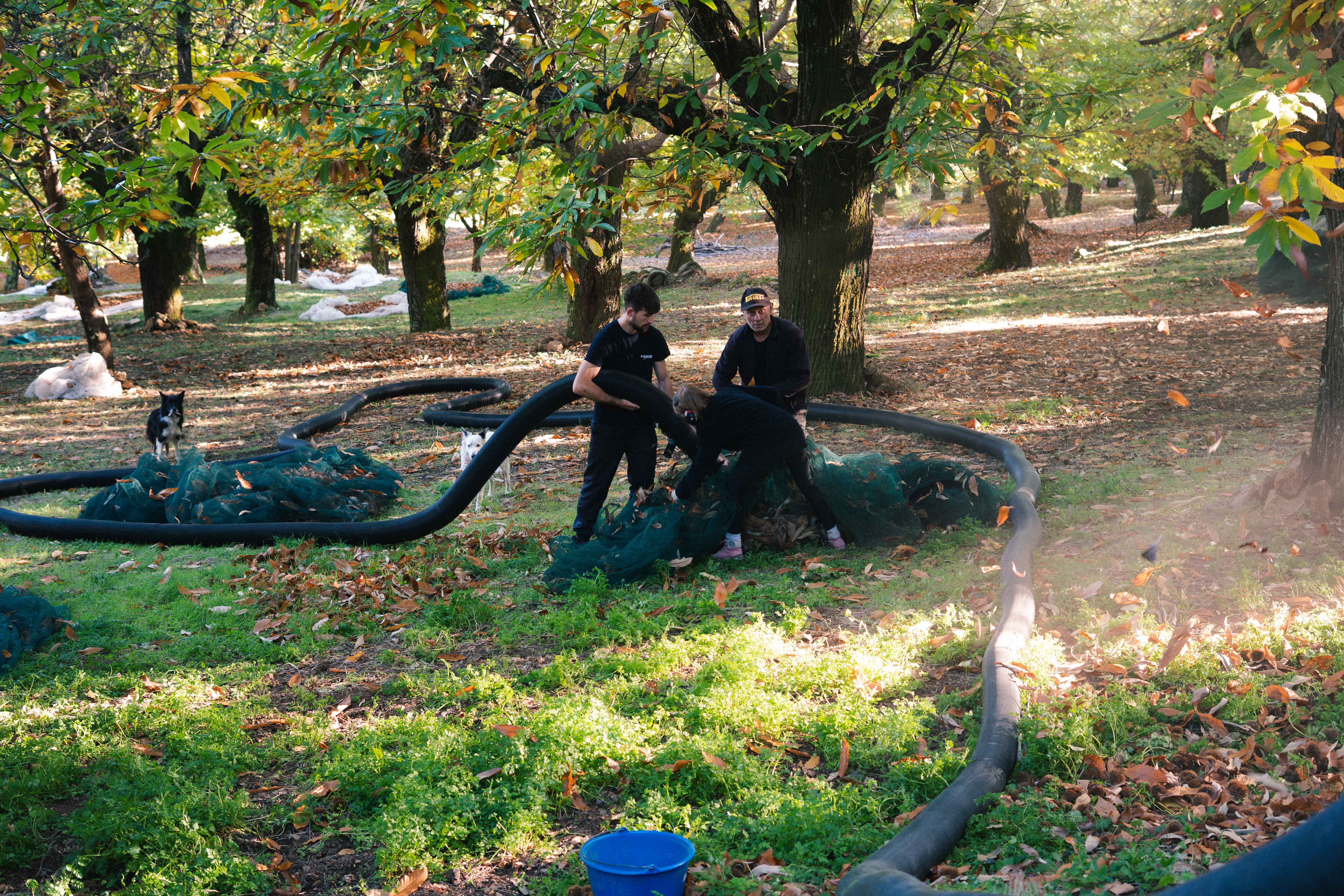
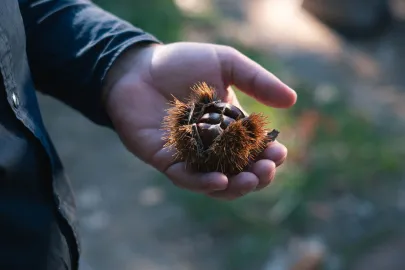
While tools have evolved over time, harvesting chestnuts remains a labour of love that requires patience. In autumn, producers install large nets beneath the trees. The fruit falls from the tree of its own accord and is then collected by hand or with portable suction harvesters.
“It’s very manual work,” Anatole explains. “The orchards are small and often family-run. The ground is uneven, which poses a challenge for machinery.” After the harvest, it is time to sort the fruit – an essential step. The chestnuts are graded, peeled and cooked before being turned into a base for various products: purée, flour, paste or preserve. Mostly done by hand, this production process forms an integral part of Maison Sabaton's identity. The skill, eye and precision of the workers play a determining role in the quality of the finished product.
Sweet heritage
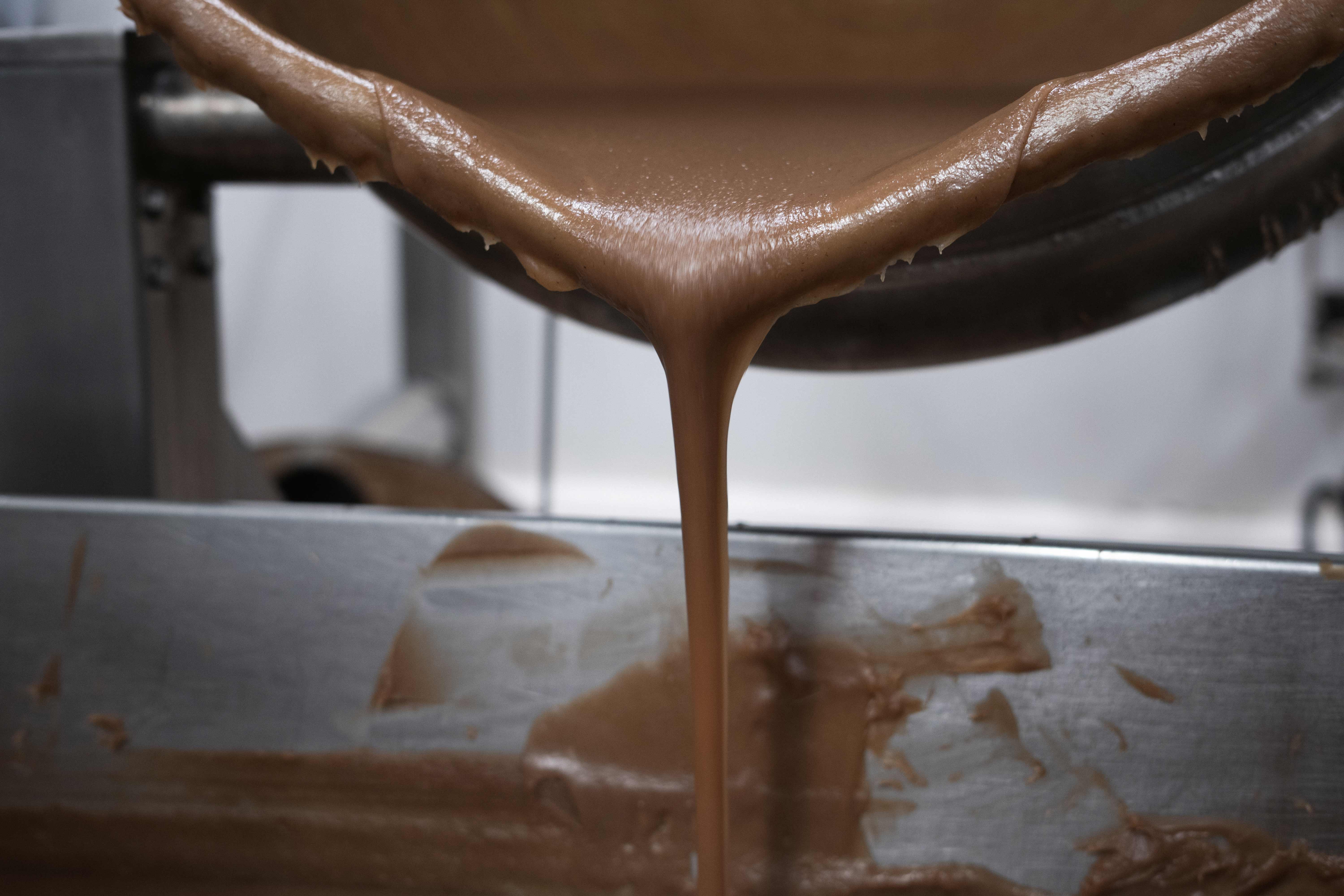
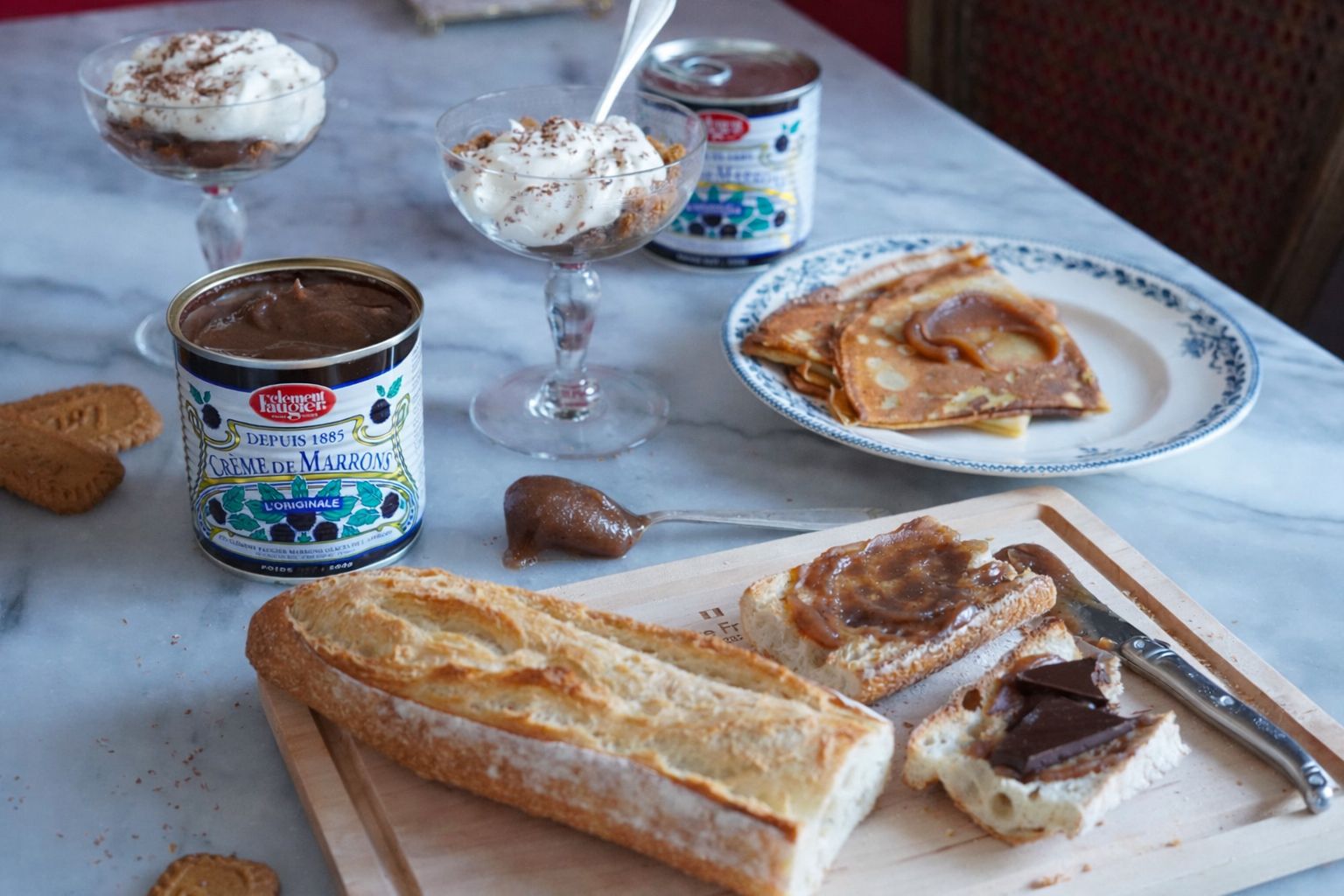
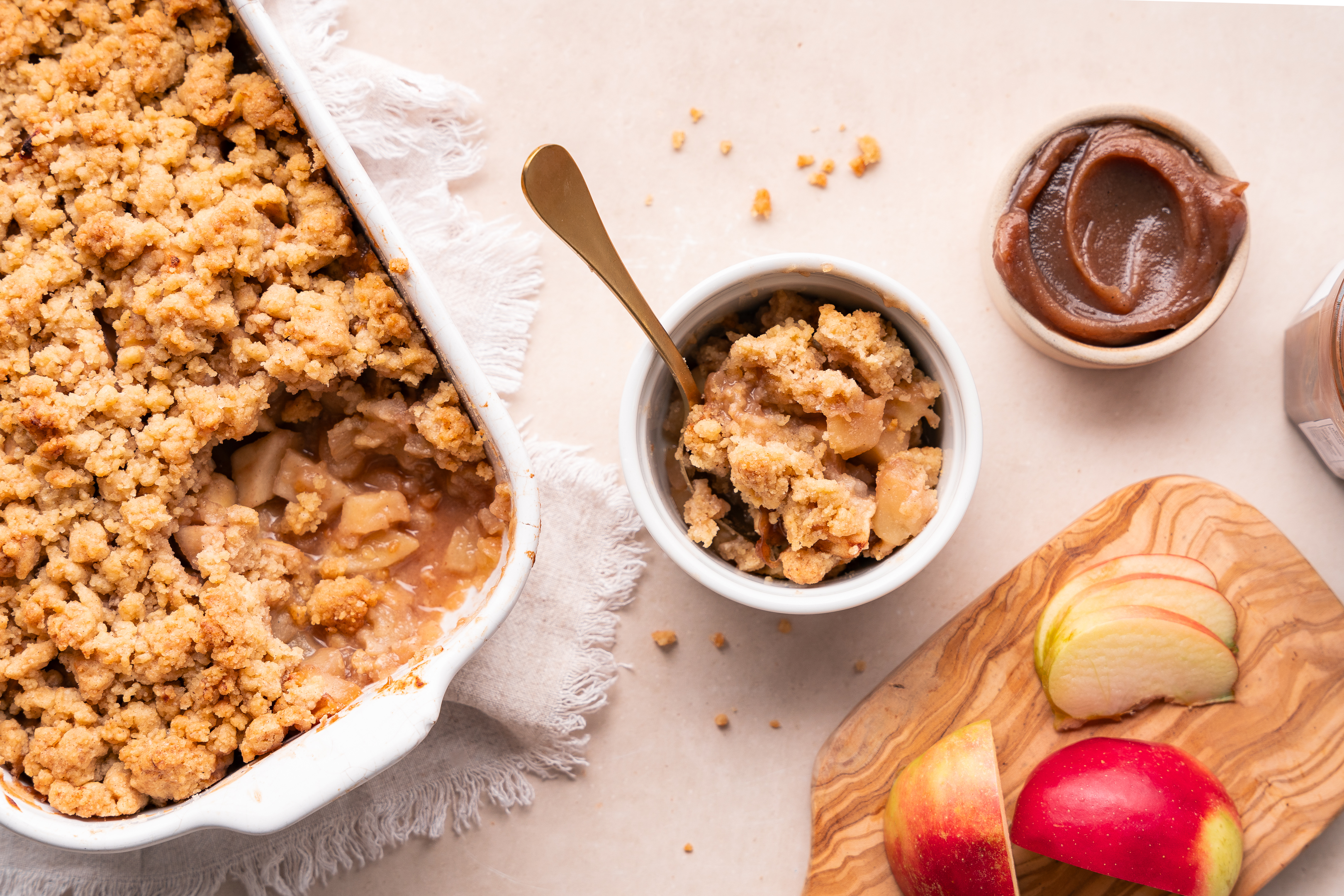
Chestnut cream is a key ingredient in French cuisine, often used in sweet pastries but also lending itself to savoury dishes. At the heart of this iconic delicacy is a blend of meticulous craftsmanship and an exceptional raw ingredient. “We start from a purée of chestnuts that we strain in order to remove the skins, then we mix it with a sugar syrup before cooking it slowly,” explains Anatole. “It looks simple, but it all comes down to the selection of fruit and the cooking.”
The chestnut cream's unique flavour comes from the balance between sweetness, texture and the purity of the fruit. It calls to mind an entire French way of life, shaped by afternoon snacks during childhood, alpine desserts, and family cakes on a Sunday. “Chestnut cream has universal appeal,” says Anatole. “It appeals to everyone because it evokes simplicity and brings back memories.”
The art of precision
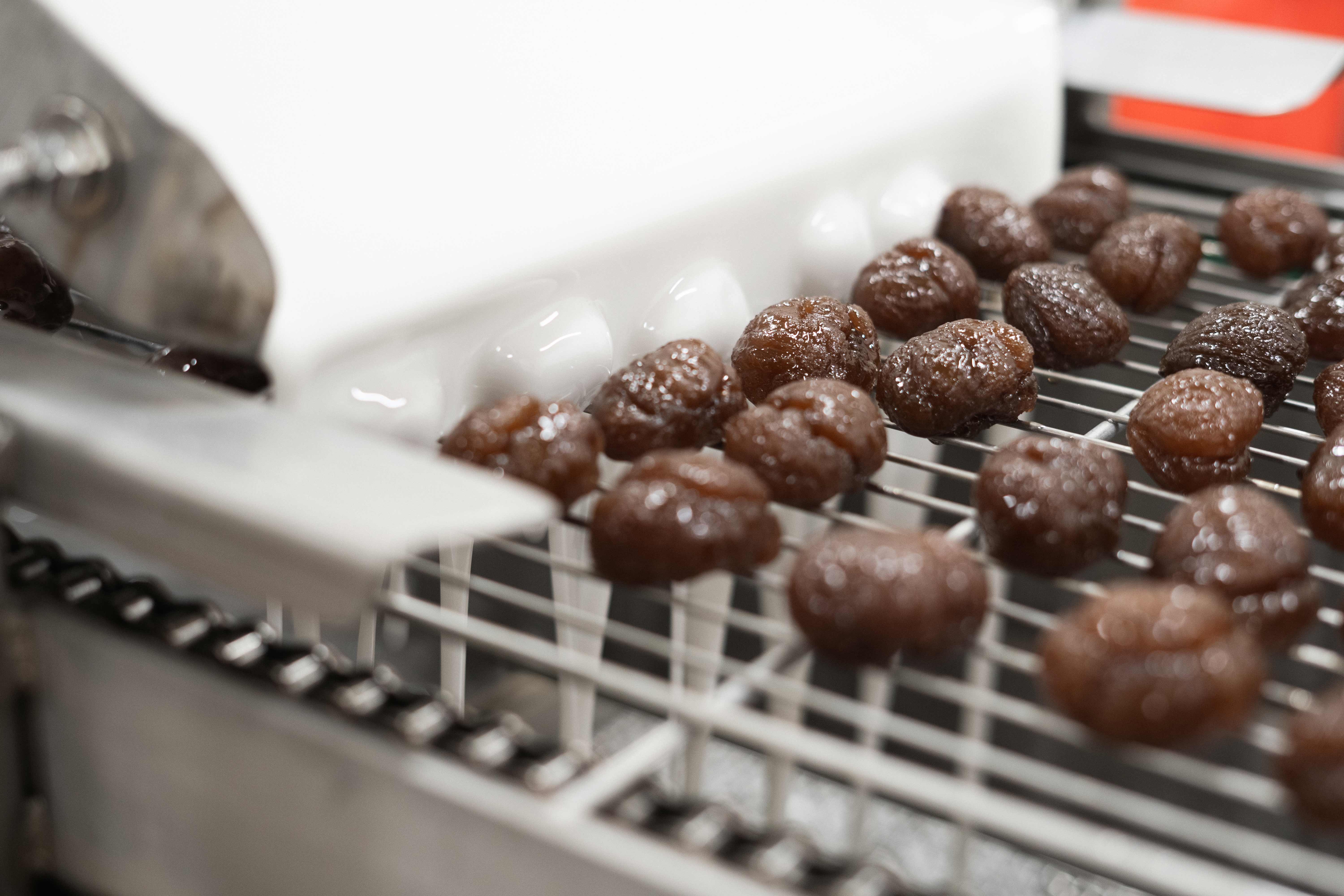
The other jewel in the Maison’s crown is candied chestnuts, undisputed stars of the festive season. Producing this delicacy requires a great deal of care and skill from workers. “You have to remove two very fine but tough layers of skin, which can only be done by hand. Each piece of fruit is then wrapped in tulle to make sure it doesn't break, then glazed, released from the mould and packaged by hand.”
This work of craftsmanship accounts for both the prestige and price of the product. Glazing each chestnut involves hours of delicate handling. The result is a shiny, creamy sweet that epitomises French refinement. “It isn't a mass-market product. It's a product made with love.”
Chestnuts grace the dinner table at the first sign of frost. They can be enjoyed roasted from street-food stalls, reduced into cream or added to casseroles and sweet desserts. The chestnut season culminates over the festive period, served as an accompaniment to turkey and venison or simply savoured in its candied form. Symbolising comfort and tradition, chestnuts also take centre stage time and again in winter cooking, set against the backdrop of a cosy atmosphere and eternal nostalgia...
A changing industry
Although chestnut trees are hardy and resilient, they have faced a number of fresh challenges in recent times. Not only is climate change transforming production cycles due to drier summers and later frost episodes, but fruit trees are also under threat from pests including ink disease and the chestnut gall wasp.
Despite these risks, Anatole remains confident. “Chestnut trees cope well in the heat. And, most importantly, the industry has been completely reorganised. Young producers are arriving on the scene, motivated by the AOP status and a desire to breathe new life into chestnut groves.”
Sabaton is also adapting as a company with a new focus on sustainability, traceability and short supply chains. “We work hand in hand with local producers,” highlights Anatole. “We want each jar of cream and each candied chestnut to tell a true story.”

A product of the future and of memory
The chestnut is not merely a relic of the past. In an era where people are searching for meaning, the product has found a new audience through its natural properties, high nutritional value and authentic taste. “It’s a healthy, gluten-free fruit that perfectly aligns with modern-day expectations,” underlines Anatole. “There is real potential to redefine chestnuts in contemporary cuisine.”
In the Aubenas workshops, an aroma of hot sugar and candied fruit is indicative of a living tradition. With its copper cauldrons and boxes of fruit, Maison Sabaton embodies this rare blend of heritage and modernity.
Anatole Sabaton's career path paints a picture of something larger at play: the fate of a fruit that reflects rural France as a whole, hard-working and abundant. From tree to jar, from forest to fork, the chestnut connects seasons, generations and practices. It embodies a connection to the earth, the beauty of savoir-faire, and a legacy of taste.
“The chestnut is a story of connection,” Anatole concludes. “Connection with the earth, with flavour, with those who worked with the fruit before us. It has transcended time. And it still has so much to tell.”

On the same subject

MEET THE MAKERS
Peaches: a source of French pride with a taste of summer
In partnership with Fruit and Veg from France
MEET THE MAKERS
French carrots: pride and passion for the land
In partnership with Fruit and Veg from France
MEET THE MAKERS

The fabulous destiny of French oysters
In partnership with Comité National de la Conchyculture
Most popular this week