Whether deglazing pans, crafting homemade stews, or marinating meats and veggies, leftover wine is truly the secret sauce. Rather than draining your bottle’s remains, repurposing leftover wine is actually easier than you may think.

Cooking with Leftover Wine: The Basics
When using leftover wine in the kitchen, there are a few things to keep in mind. First and foremost, avoid using wine that has turned completely sour or vinegary. This will ensure that sauces and glazes remain flavorful and fresh. Generally speaking, wines that have been stored in the fridge for up to 10 days can be repurposed for cooking. Beyond 10 days, simply follow your senses; if the wine still smells fresh and fruity, you can likely still repurpose it, though err on the side of caution and use it sooner rather than later.
Cooking with Leftover Red Wine
Cooking with leftover red wine is one of the easiest ways to add depth and complexity to stews, sauces, and even sweet desserts. Youthful, fruit-forward reds tend to work best, especially those with bright acidity and low levels of tannins.
Bœuf Bourguignon
Hailing from Burgundy, this hearty, belly-warming beef stew is best enjoyed on chilly fall or winter evenings, and is prepared by simmering red wine, garlic, carrots, and herbs. Pinot Noir or Merlot are generally the go-tos, though fuller-bodied reds (Cabernet Sauvignon, Syrah) can be used to create a more robust sauce.
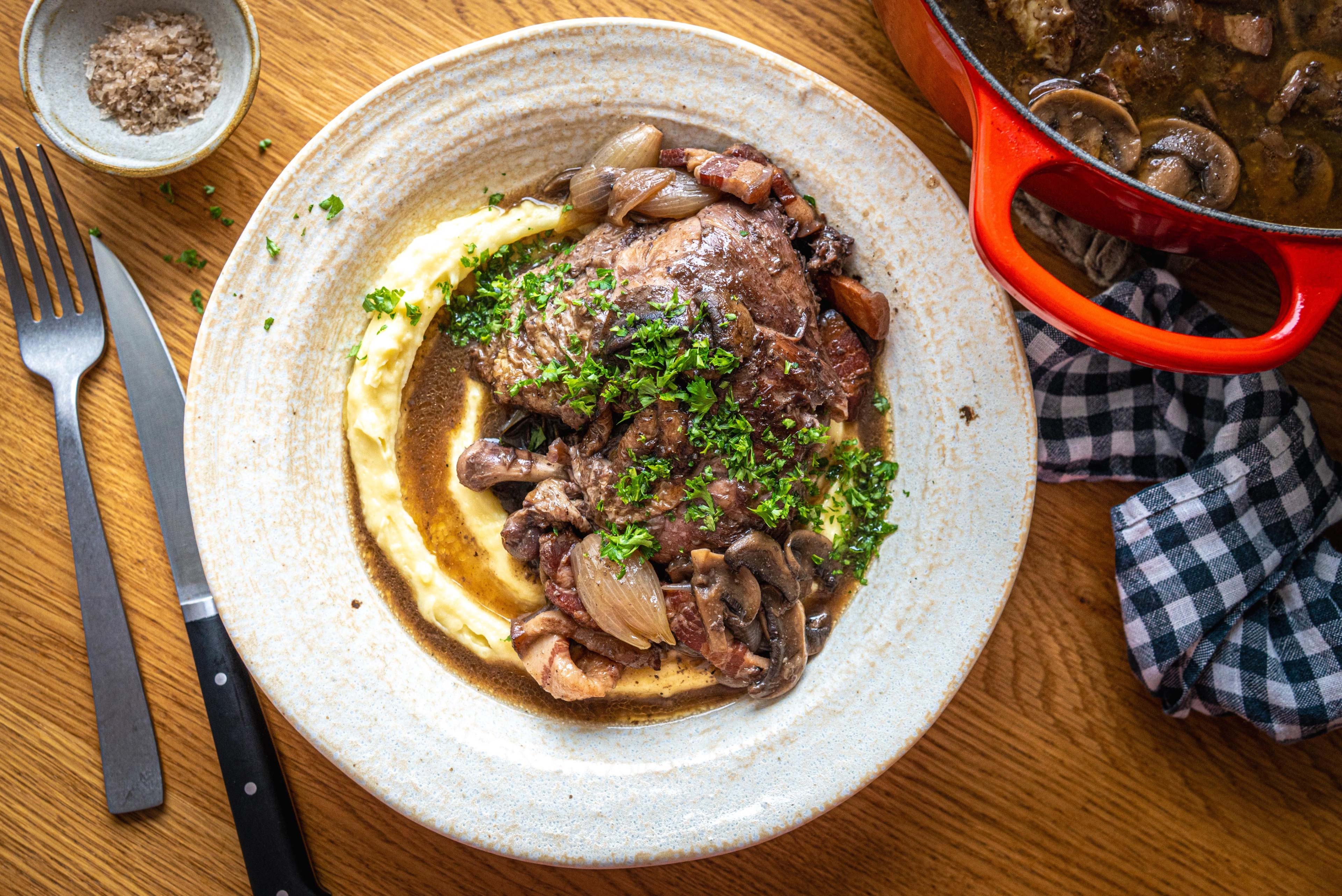
Coq au Vin
This traditional chicken stew harmoniously meshes rustic countryside flavors with classic French cooking techniques. The recipe calls for Bourgogne wine, though any Pinot Noir or dry, light to medium-bodied French red wine (Côtes du Rhône, Beaujolais) will do the trick.
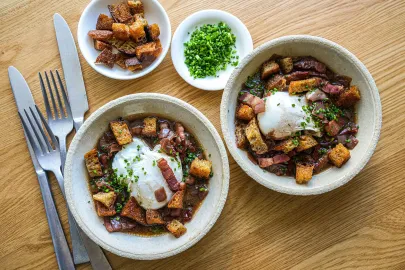
Œufs en Meurette (Poached Eggs in Red Wine Sauce)
Another Burgundian classic! This bistro-inspired favorite makes for an elegant starter dish before dinner, as well as a savory component to French-inspired brunches. Stick to lighter, fruit-forward reds (Pinot Noir, Gamay) here, as overly oaked or tannic wines can take away from the dish’s delicate nature.
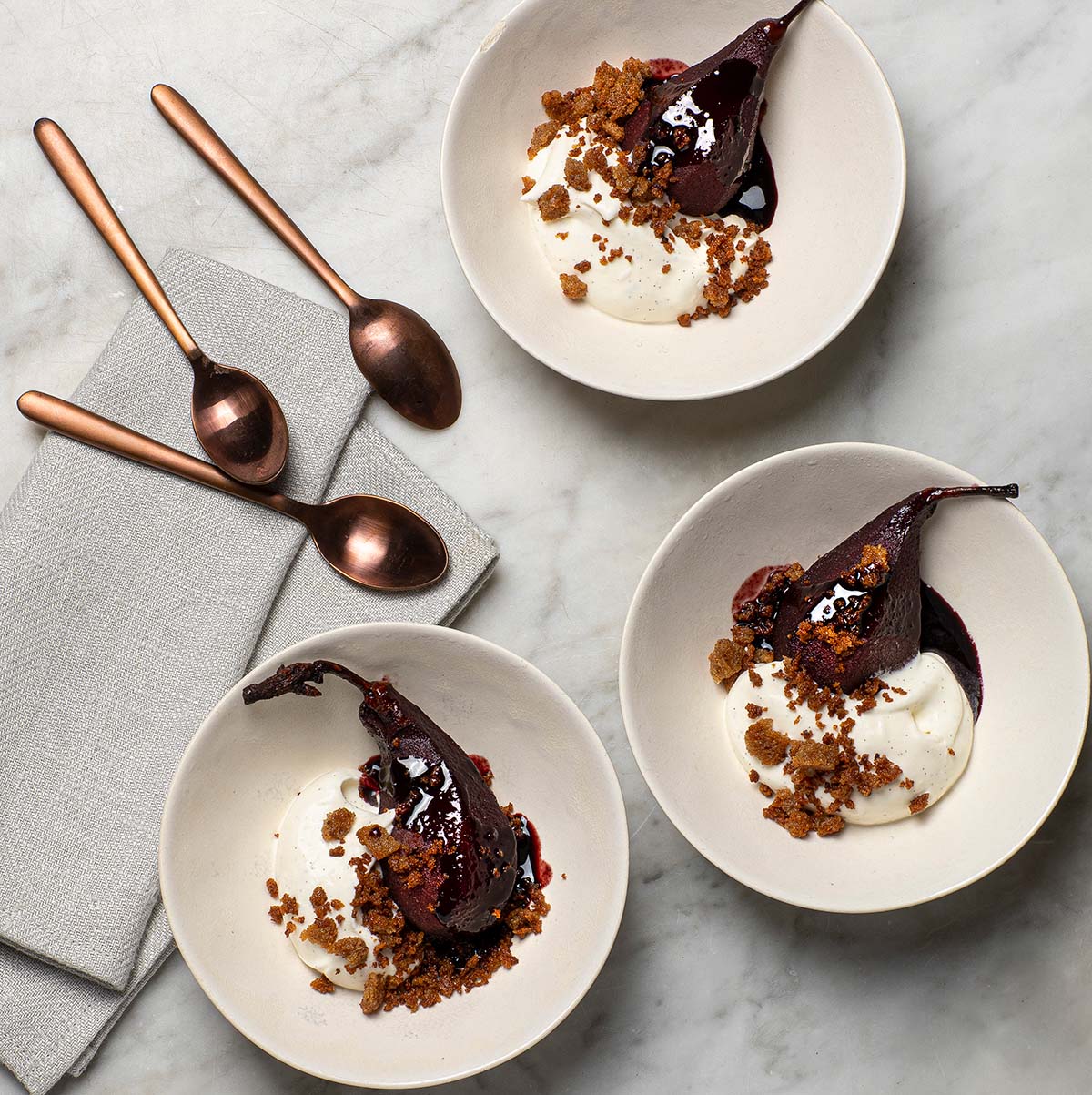
Red Wine Poached Pears
Feast your eyes (and palates) on this beautiful, sweet-yet-balanced dessert made from firm French pears and fruit-forward red wine – any juicy, medium-bodied red will work just fine here.
Cooking with Leftover White Wine
The zesty acidity found in leftover white wine is one of its greatest assets, as its salivating brightness brings added texture to pan sauces, glazes, and risottos alike. Generally speaking, it’s best to avoid overly oaked white wines, as the sweetness and heaviness of the oak flavors can disrupt the balance of the final sauce.
Scallops with Beurre Blanc
This signature French butter sauce is the gift that keeps on giving. Prepared by whisking cold butter into a reduced mixture of white wine, vinegar, and French shallots, the sauce’s creamy-yet-tangy flavor is a match for a number of lean proteins, including French scallops, pan-fried white fish, and trout. To keep the sauce balanced, stick with dry, unoaked / very lightly oaked white wines.
La Chaudrée (Fishermen Stew)
Hailing from France’s South West region, this coastal fishermen stew meshes half a bottle of dry white wine with fresh fish broth, flaky white fish (hake, cod, or sole), leeks, garlic, and butter to create a healthy, satiating stew perfect for enjoying year-round — any white with bright acidity (Sauvignon Blanc, Melon de Bourgogne, Petit Manseng) will get the job done.
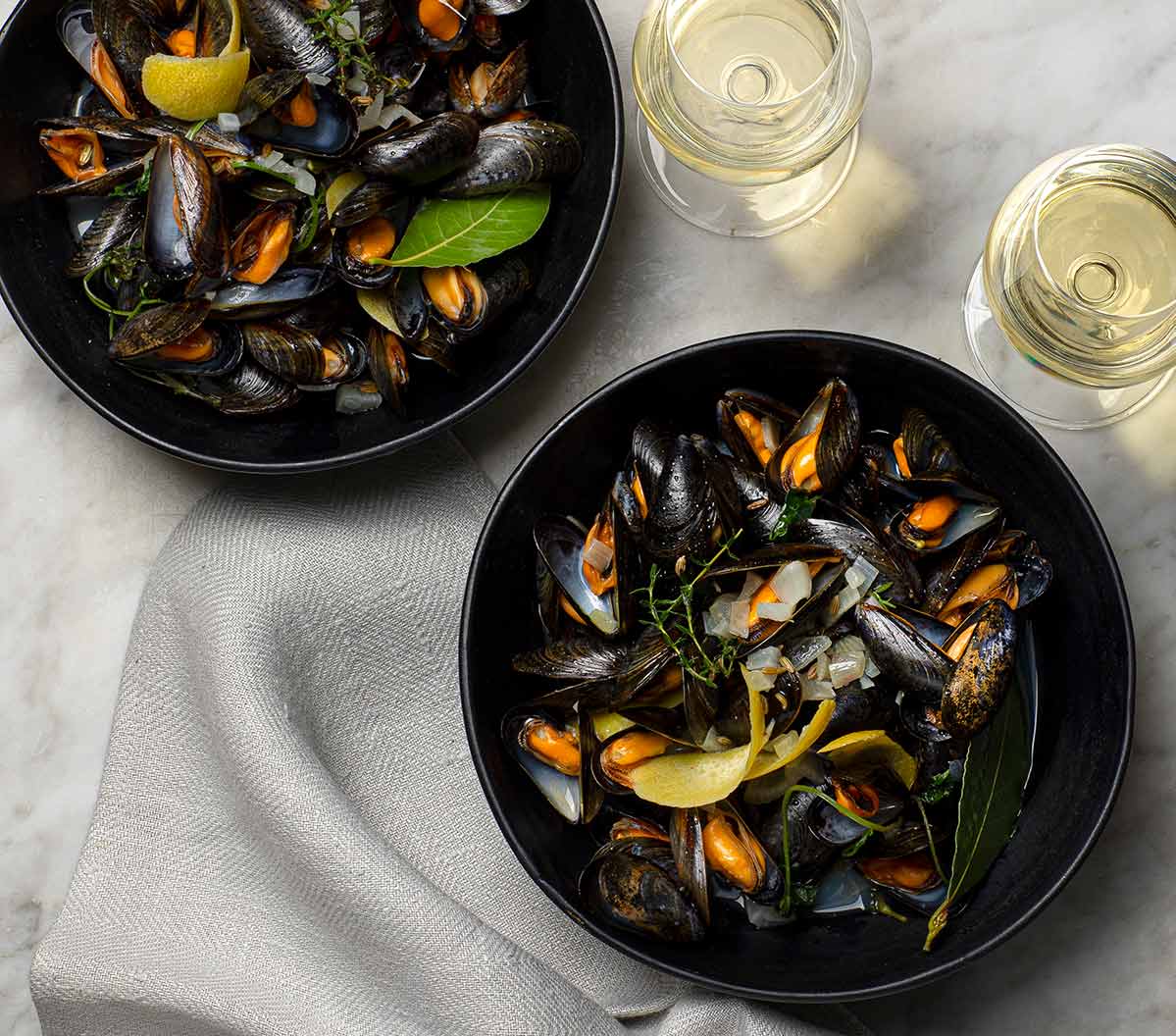
Moules Marinières
Like warm sunshine and salty sea air in a bowl! To prepare the garlicky white wine sauce, reach for something dry and crisp, such as Muscadet, Sauvignon Blanc, or Chablis (and don’t forget a fresh bottle to pop and pair with the completed dish).
Nutty Risotto with Camargue Rice
Did you know that just one region in France produces all ‘made in France’ rice? It’s true! Enter Camargue rice, the perfect pick for mixing into homemade risottos. When prepared with leftover French white wine, particularly unoaked / lightly oaked Chardonnay from Bourgogne PDO or Sauvignon Blanc from Touraine PDO, the rice’s signature nutty and aromatic flavors take on a whole new dimension.
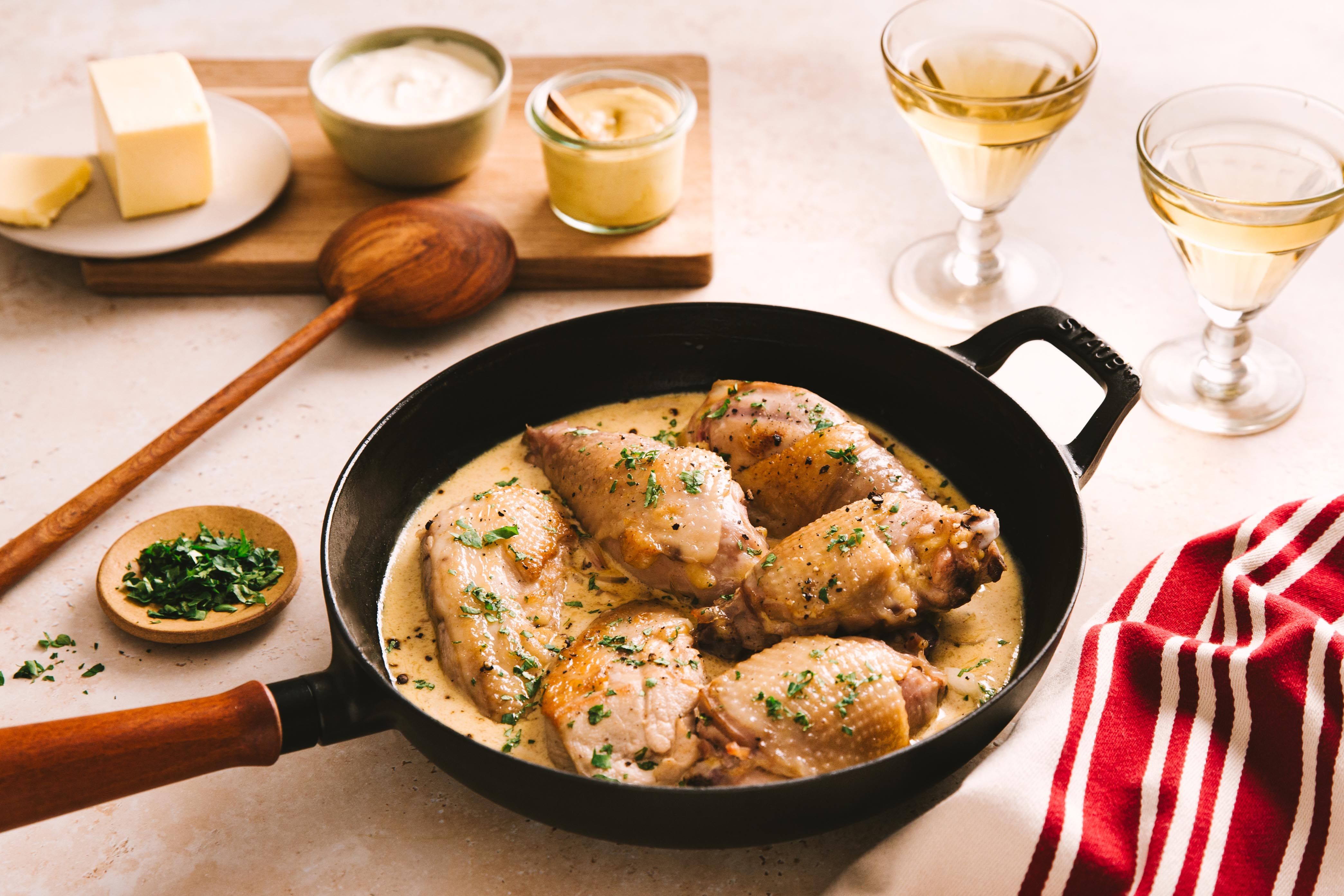
Chicken Fricassée with Mustard Sauce
Timeless and tasty, this classic French dish meshes gently simmered chicken and creamy sauce, the latter of which is prepared with Moutarde de Bourgogne PGI, French butter, crème fraîche, and a glass of French white wine. We recommend using Chardonnay from Bourgogne to keep the dish as close to its Burgundy roots as possible!
Cooking with Leftover Sparkling Wine
Similar to white wine, leftover sparkling wine is a true asset in the kitchen, as its high acidity and toasty undertones add tons of character to stews and sauce – and if the bubbles have gone flat, worry not. The wine’s innate flavors and complexity will still work their magic.
Champagne Beurre Blanc
For a softer, toastier, and more delicate version of beurre blanc sauce, look no further than your leftover bits of Champagne. To prepare the sauce, simply reduce finely minced shallots, ¼ cup of leftover Champagne, and white wine vinegar in a pan, then remove from heat and whisk in small cubes of unsalted butter one chunk at a time. Swirl the butter into the pan until the sauce is silky smooth, then serve over your choice of chicken, fish, or lightly cooked vegetables.
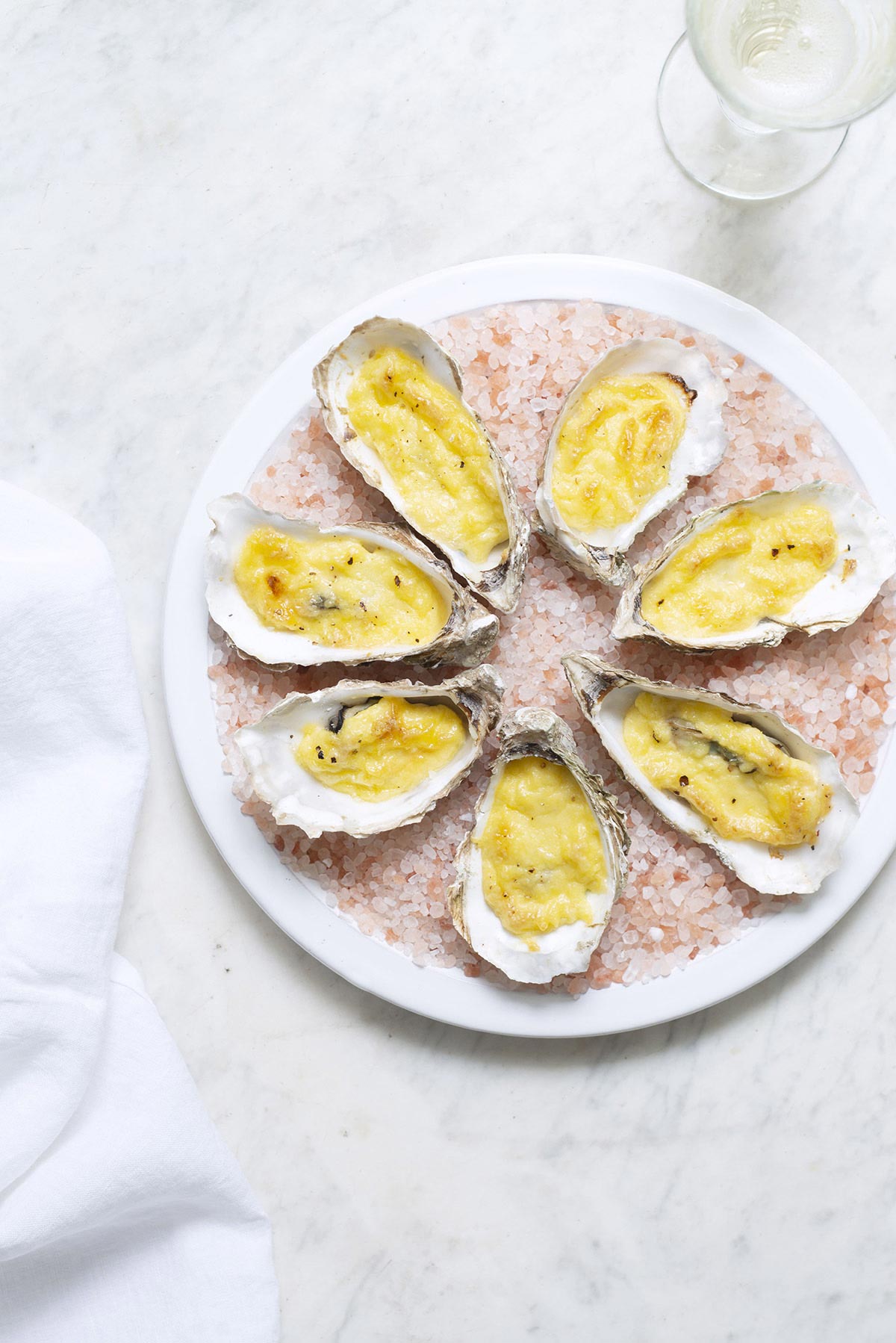
Oysters with Crémant d'Alsace Sabayon
Looking to add an extra pop of flavor to your French oyster moment at home? Adding a touch of Crémant d’Alsace – or really any French sparkling wine – will do the trick.
Cheese Fondue Savoyarde
Although many standard fondue recipes call for dry white wine, swapping with sparkling wine adds complexity and toastiness to the melted cheese, and the wine’s high acidity also ensures that all ingredients melt evenly into a smooth and velvety cream.
Cooking with Leftover Sweet Wine
Whether poaching fruit or crafting sweet, sticky glazes for desserts or poultry, leftover sweet wine promises to fit the bill – though heads up! Reducing sweet wine concentrates its sugars even further, so avoid using it in pan sauces or other savory recipes.
Sweet Wine Sabayon
Light, frothy, and deliciously sweet, this custard-like French staple is made with whisked egg yolks, sugar, and a dose of sweet wine, preferably Sauternes or sweet Muscat (such as Muscat de Rivesaltes). Spoon over fresh French strawberries for an added layer of flavor!
Olive Oil and Sweet Wine Cake
This easy-to-make cake is perfect for enjoying after long, hearty dinners – or even with your French-inspired café gourmand or afternoon goûter moment at home. Combine olive oil, eggs, sugar, flour, and French dessert wine (such as Sauternes or Monbazillac) and let the sweet treat do the rest.
Above all, cooking with leftover wine is not only a way to get creative in the kitchen, it’s also an easy way to ensure minimal waste at home. Sustainability with a side of sweetness? Count us in!
Contributor

Vicki Denig
Editor
Tags
On the same subject

Most popular this week