
What do French kids really eat? From crèche to elementary school, French children are introduced to a wide variety of foods through school lunches, family meals and a food culture built around diversity, seasonality and eating together.

I’ve raised three children in France and spent more than a decade inside French school cafeterias — in crèches (daycare), preschools and elementary schools. What I’ve seen children served has been enough to generate interest around the world: beet salads, lentils, mussels, all sorts of fish, seasonal fruits and vegetables, and cheeses of all kinds, including some fairly pungent ones.
I’ve watched children eat, helped serve meals and talked to children and lunch staff in schools around the country. French children don’t necessarily love everything they are served, and they certainly aren’t immune to picky eating. What they do have is a food environment that exposes them to an enormous variety of foods and flavours from the very beginning.
© Rebeca Plantier / Lessons From France
It starts very early
Exposure to different foods can begin with a baby’s first purées. A walk down the baby-food aisle of an average French supermarket gives an idea of the range: asparagus, artichoke, leek and fennel are not unusual ingredients, while ratatouille and fish appear among the choices for older babies.
At home, many parents introduce a wide variety of fruits and vegetables from the beginning. Rather than relying on a narrow category of “children’s foods,” babies can encounter many of the same ingredients they will later find at the family table — and, for those who attend, at crèche.
What happens in the crèche
Some children enter crèche when they are only a few months old; others begin later. In many public crèches I have visited, food is prepared by the elementary-school kitchen or another municipal kitchen serving children across the crèche, maternelle and elementary-school system.
Kitchen staff adapt meals for the youngest children. Vegetables may be moulinés (finely blended) or puréed for babies, while meat and fish are cut into smaller pieces for toddlers, but the underlying ingredients are often much the same.
Even very young children eat sitting together at tables, using real plates, cutlery and glasses — a way of eating that continues through maternelle and elementary school.
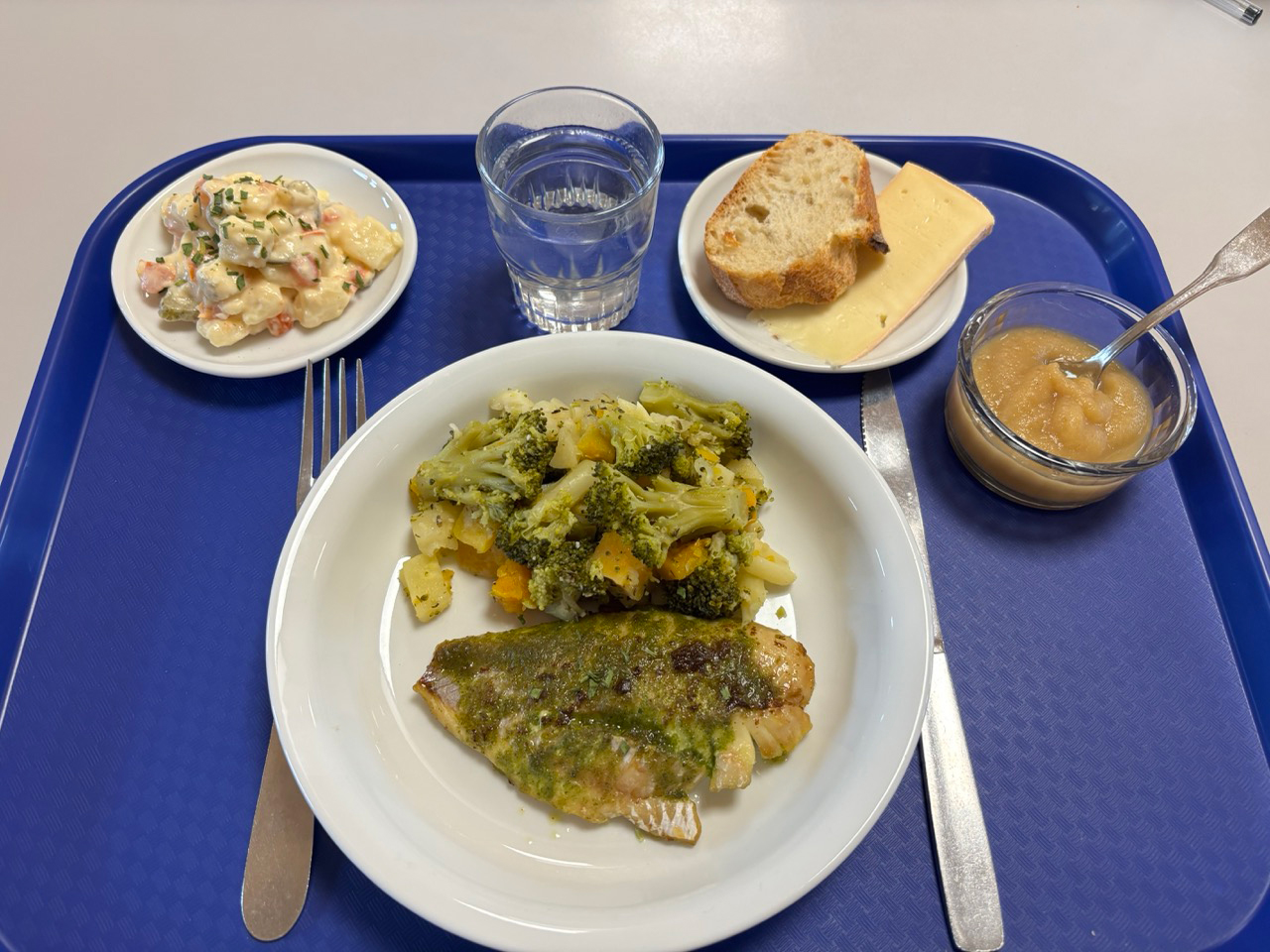
By elementary school, the food itself is essentially the same kind of food eaten by adults. Teachers, police officers and other municipal employees sometimes eat meals prepared by the same kitchens. Children can therefore be introduced from infancy to many of the same foods eaten by adults — simply adapted to their age.
© Rebeca Plantier / Lessons From France
From maternelle to elementary school
By the time children enter école maternelle (preschool) at around three, there isn’t a sudden shift to a new way of eating. There is continuity from crèche through preschool and into elementary school, with food becoming less adapted in texture as children get older.
By elementary school, children are eating a four-course lunch: a starter, a main dish, a cheese or dairy course, and dessert.
Quality and sourcing
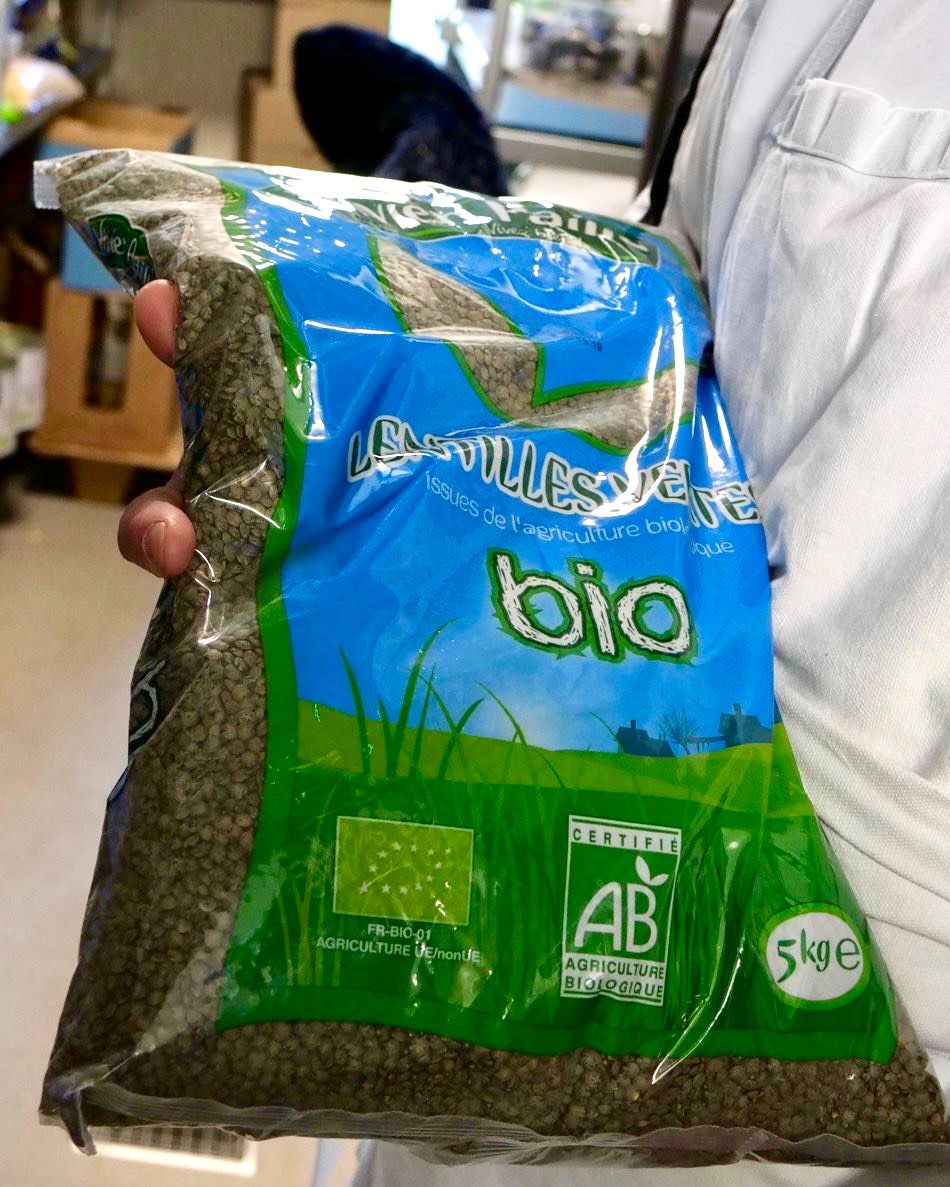
Over the past decade, the quality and sourcing of food served in French public schools has become increasingly regulated. Today, at least 50% of food purchased for collective catering must meet recognized quality or sustainability criteria, including at least 20% organic food.
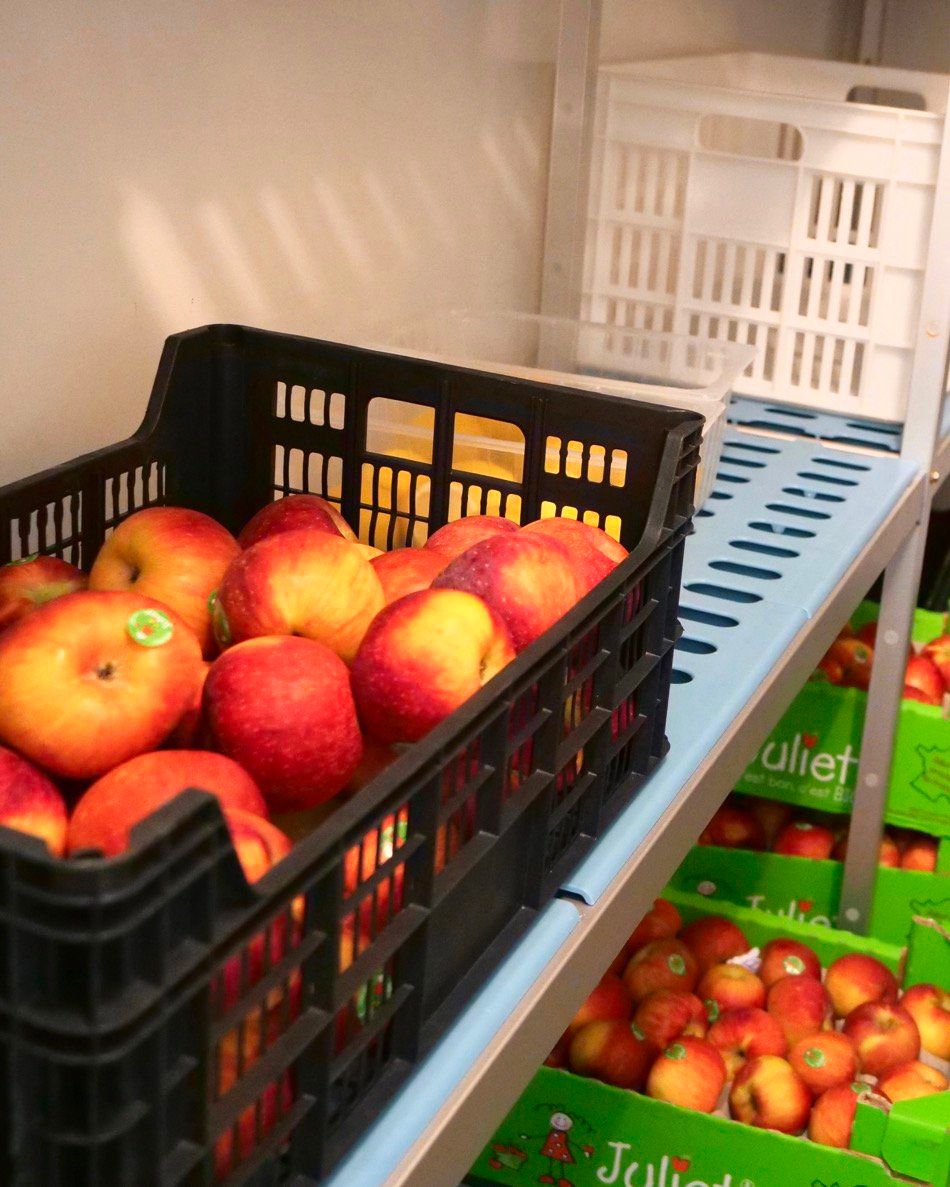
How meals are prepared varies by municipality: some are cooked from scratch in the school kitchen, others in a central municipal kitchen, while some municipalities use outside catering companies. I’ve been in school kitchens between six and seven in the morning as deliveries arrive, watching crates of fresh fruits and vegetables come through the door before the day’s cooking begins. Seasonality is visible not only on the menus, but in what arrives in the kitchen.
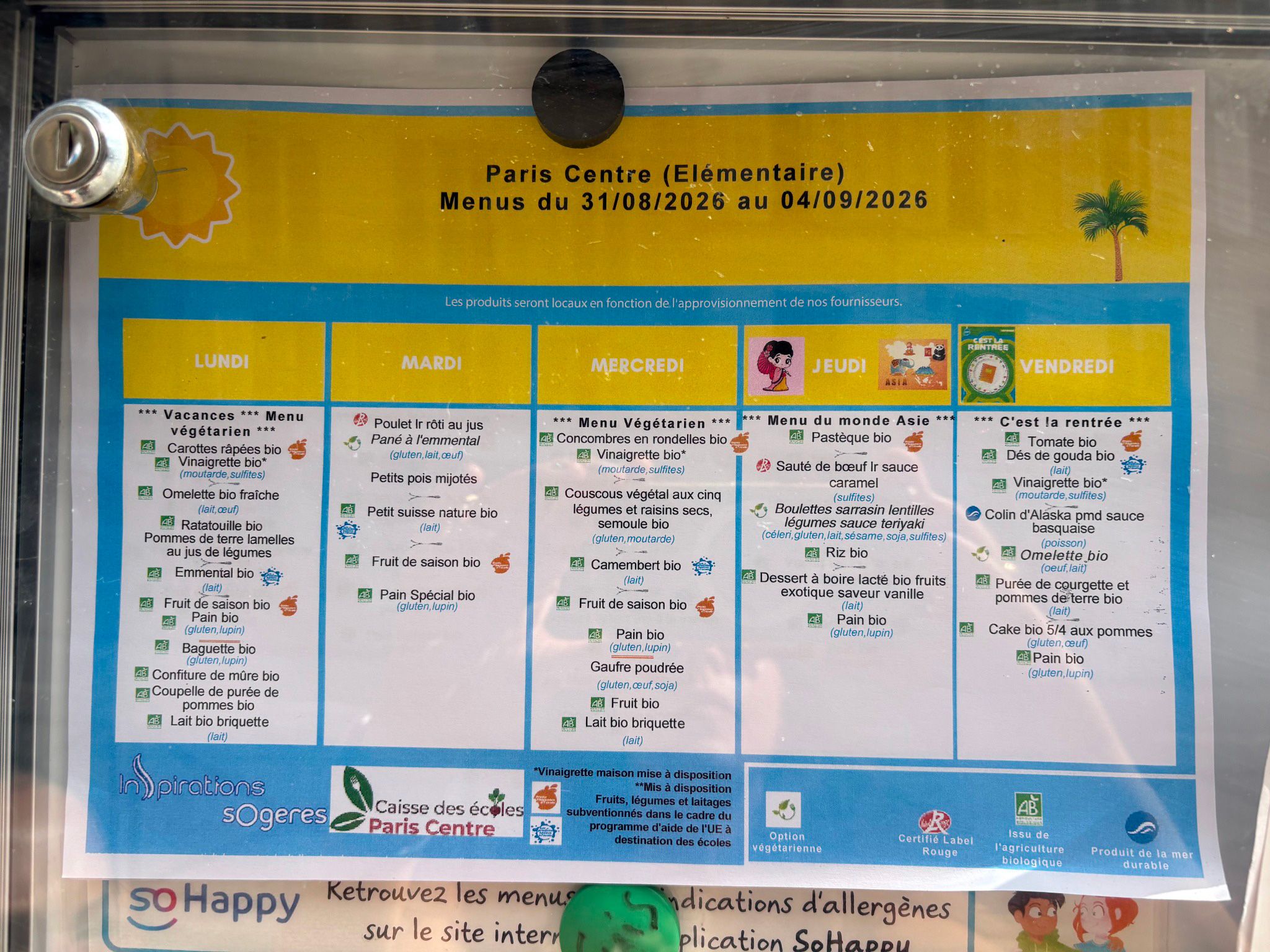
Menus also make sourcing visible with quality labels. Alongside individual ingredients you can find the EU organic green leaf (or AB logo) for organic products, Label Rouge for products meeting superior quality standards, and geographical designations such as PDO (Protected Designation of Origin) and PGI (Protected Geographical Indication).
© Rebeca Plantier / Lessons From France
What does a French school lunch actually look like?
One elementary-school menu from Paris’s 15th arrondissement included:
Starter: Organic grated carrots
Main course: Spaghetti Bolognese with French-origin beef
Cheese course: Organic Comté (PDO)
Dessert: Milk-chocolate mousse
Bread: Label Rouge bread
On another day that same week:
Starter: Melon
Main course: Veal sauté, tajine-style, made with French-origin veal, with organic couscous semolina
Cheese course: Goat cheese
Dessert: Apple and strawberry compote
Bread: Label Rouge bread
Vegetables appear on every menu and reappear in different forms over time. Zucchini, for example, might be served as soup one week, in a gratin another, or as part of ratatouille. Repeated exposure builds familiarity while giving children different opportunities to enjoy a vegetable depending on how it is prepared. The expectation isn’t that every child will like every vegetable, but that vegetables and variety become ordinary parts of eating.
© Rebeca Plantier / Lessons From France
How French food culture continues at home
Children don’t learn to eat only at school. What happens in the cafeteria sits within a larger French food culture. At home, children encounter many of the same ingredients and habits: vegetables, seasonal foods, cheese, fish and meals eaten together at the table.
None of this means French children exist in some idealized food bubble. They might eat packaged cookies, sweets and fast food, or drink soda. My own children certainly did at times. But those foods didn’t define the way they learned to eat. The everyday pattern — at home and at school — was regular meals, variety and eating together at the table.
What interests me most after years of observing French children eat is how these two environments reinforce one another. A child may encounter lentils or beet salad both at school and at home. The expectation of sitting down for a meal is repeated in the cafeteria, while school also exposes children to foods their own family may not serve.
The result, I think, is a kind of shared food culture. Not every French family eats the same way, and certainly not every child likes the same foods. But when millions of children repeatedly encounter similar meal structures, ingredients and expectations — at school and at home — certain ideas about eating become remarkably familiar.
French children aren’t born eating mussels, beet salad or zucchini soup, and they aren’t immune to picky eating. They grow up in a culture that keeps putting these foods in front of them — from their first purées, through crèche and school, and around the family table. They don’t have to love everything. But they are given plenty of opportunities to learn to eat it.
Contributor

Rebeca Plantier
Writer & researcher
On the same subject

Most popular this week