


Each year, it heralds the arrival of spring! As well as bringing a touch of white, purple or green to our plates, French Asparagus offers flavors that are bold or delicate depending on the variety. Add to that its broad versatility and you will want to include it in your culinary repertoire!
What you need to know
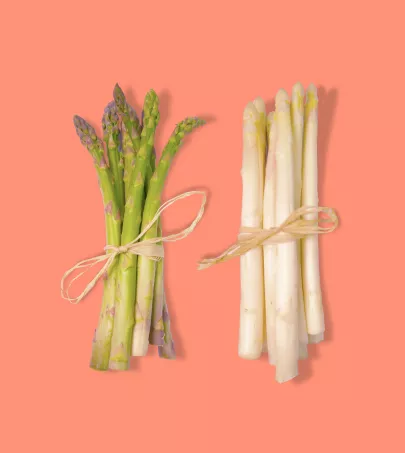
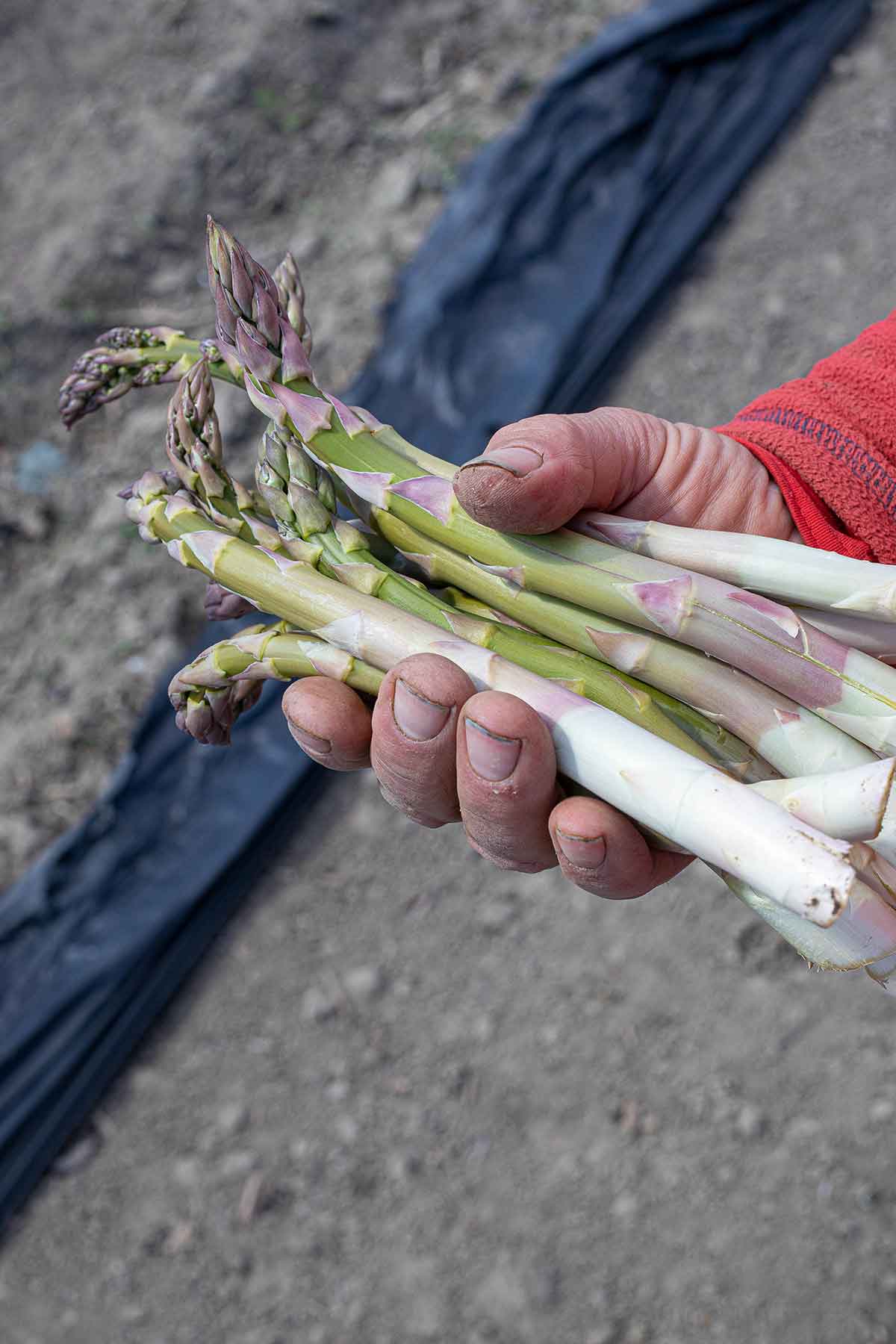
Originally from the Mediterranean basin where it grew wild, it was only in ancient times that we began to cultivate asparagus. At that point it became a luxury product and remained so until the 19th century when its cultivation spread throughout France. Asparagus grows underground, lengthening in the quest for light. Its whiteness whilst under the sandy soil turns to purple and then green in the open air, under the first rays of the spring sun, from March to June. These are the three main varieties of asparagus, each with its own organoleptic profile and multitude of ways to savor it!
Characteristics

Look
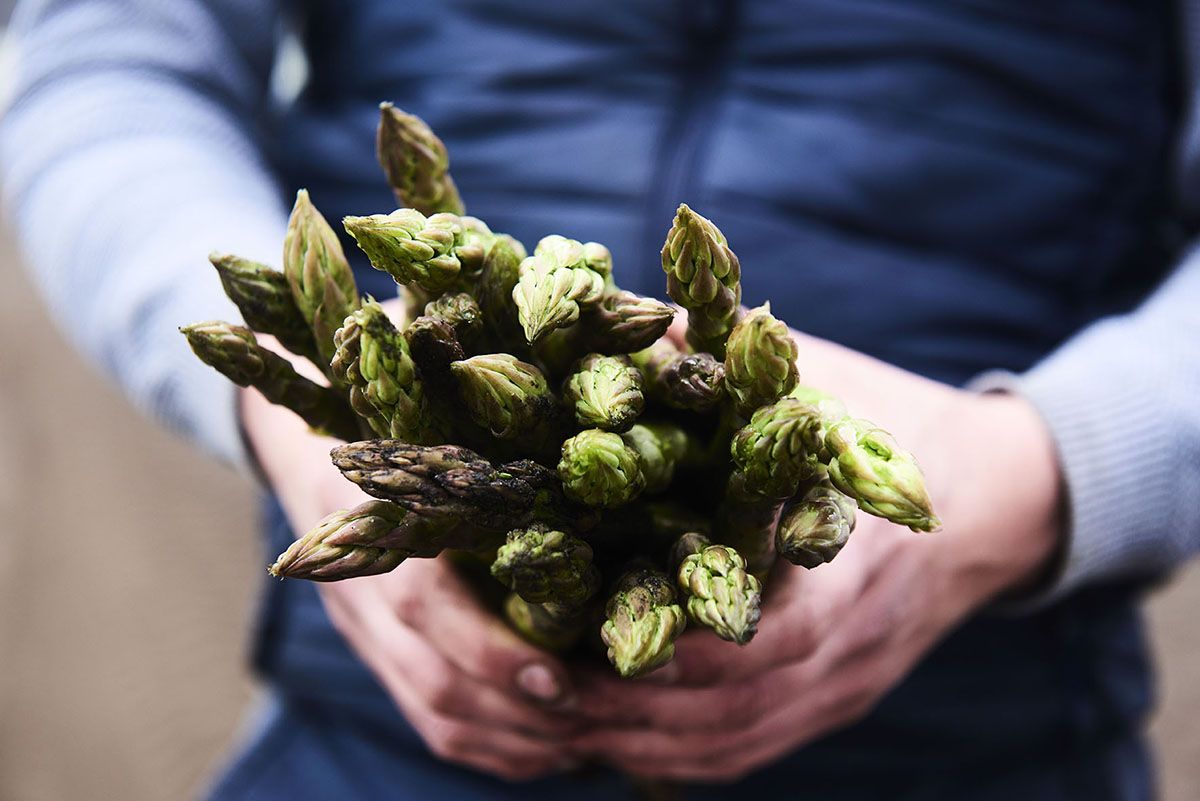
Look for tight scales and intact tips with no bruising. For the white varieties of Landes and Blayais asparagus, look for the distinctive PGI label.

Touch
The spears must be firm, rigid and brittle.

Taste
Rather bold, even slightly bitter when white, asparagus becomes more refined, tender and fruity once purple and even more so when green.
Nutritional benefits
Its high levels of antioxidants, fibers and B vitamins make asparagus an excellent choice for every meal!
Editor's note
« Did you know that in Île-de-France, within 16 miles of the Eiffel Tower, a renowned variety of asparagus is grown? White Argenteuil asparagus, the cultivation of which began in 1830, has since received an award at the 1878 Paris World Fair and become a firm favorite of many Michelin-starred chefs. »
How to use
Storage
No longer than three days in the refrigerator, preferably wrapped in a damp cloth.
Preparation
After a quick rinse in clean water, only white asparagus needs to be peeled, due to its thick skin.
Uses
The choice is yours! Depending on its thickness and variety, asparagus can be steamed, poached, roasted or pan-fried, and added to salads, cream soups, gratins, casseroles, pasta, and more.
Pair with
With almonds, truffle, fresh herbs, cured ham, beef, goat cheese, apples, lemon, and so on, and a white wine such as a Sancerre or Sylvaner.
On the same subject
Fruits & Vegetables