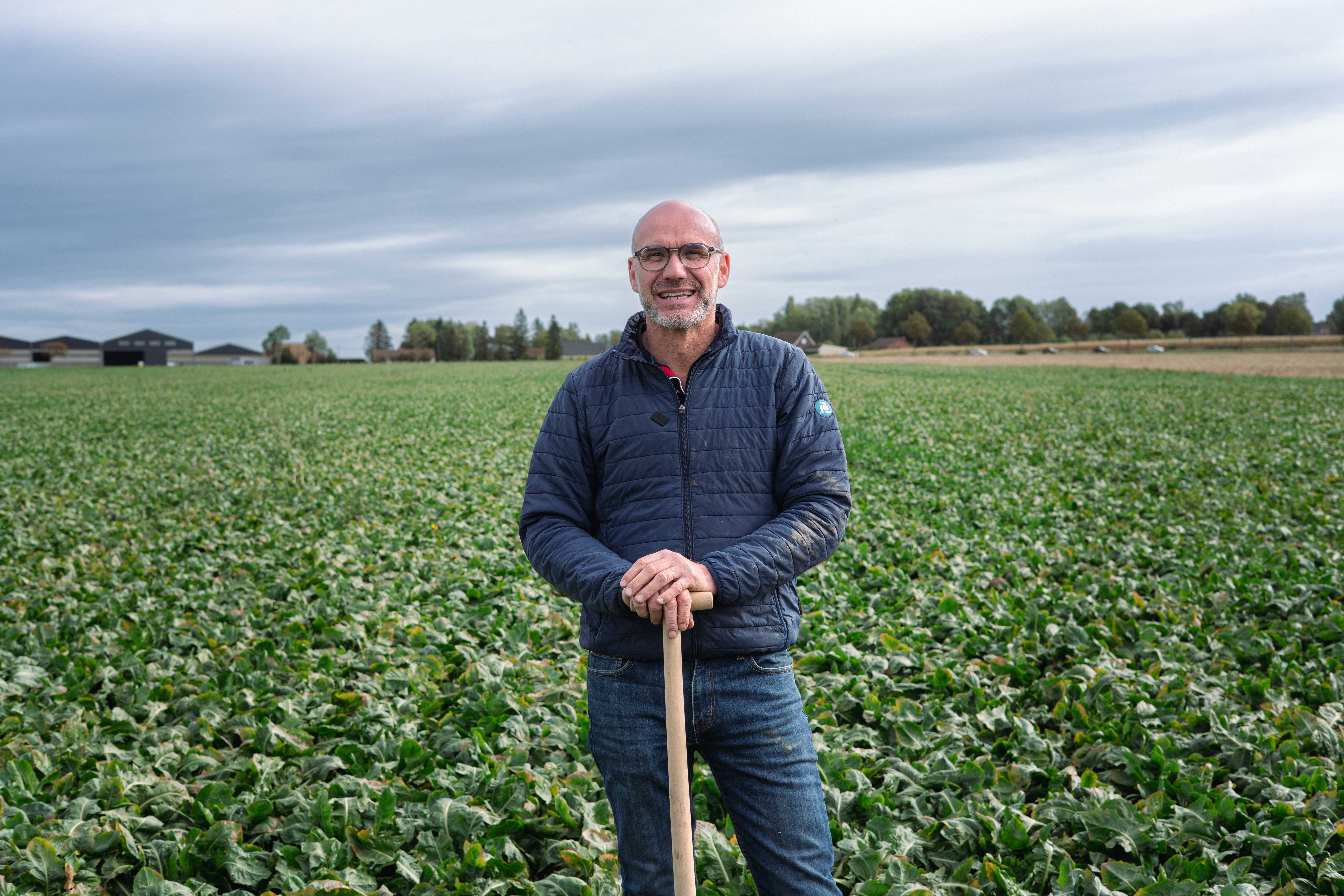
Behind this emblematic vegetable lies a remarkable story of tradition, patience and expertise. Meet Philippe Brehon, a chicory producer from northern France who continues to uphold a family craft and the agricultural heritage of the Hauts-de-France region.

Few vegetables epitomise a region as much as the chicory. In northern France, this compact white vegetable shapes not just the landscape, but the very fabric of local history and heritage. Prized for its crunch, freshness and slight bitterness, over time it has come to symbolise agriculture in the Hauts-de-France region, the result of expertise passed down from generation to generation and a craft requiring fine precision that remains largely unknown to the wider public.
In the Hauts-de-France region, Philippe Brehon has devoted his life to this line of work for over 20 years. “I learned the trade from a very young age alongside my family,” says the producer. It is both a legacy and a calling, shared by many of the region’s producers who are carrying on a family tradition deeply rooted in the local area. “Many farms here have been in the same family for generations. That’s how the craft is passed down, and it’s what makes it our greatest strength.”
Northern France, home of the chicory
Although chicory is now also grown in other regions of France, such as Brittany, Normandy and the Grand Est, the far north remains its historic home and the main production area. And the reason we naturally associate chicory with this region is that the conditions are particularly favourable to its growth. “The rich soil and cool climate in northern France make it an ideal environment for cultivating high-grade chicory roots,” explains Philippe Brehon.
Chicory is not like other vegetables. With its distinctive blend of fresh, crunchy bite and subtle bitterness, it has a personality all of its own. That very bitterness is an essential part of its character.
One of the reasons chicory is so popular is its versatile nature. After all, few vegetables can boast being enjoyed in so many different ways with quite as much success. “It can be eaten either raw or cooked, and used in a wide variety of recipes and dishes,” says Philippe Brehon. “In salads, it brings a fresh, crisp crunch, whereas roasting, braising or caramelising it brings out softer, richer and more comforting notes.”
The art of timing
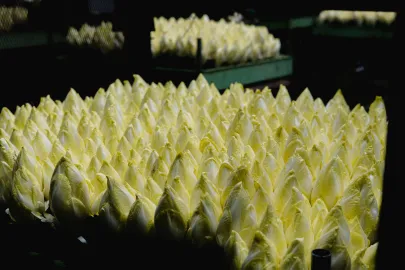
Before arriving on our plates, chicory goes through a remarkable journey and a cultivation process like no other. It all begins in the fields. For several months, growers cultivate chicory roots that store up the vital energy reserves needed for the pale heads to sprout later on.
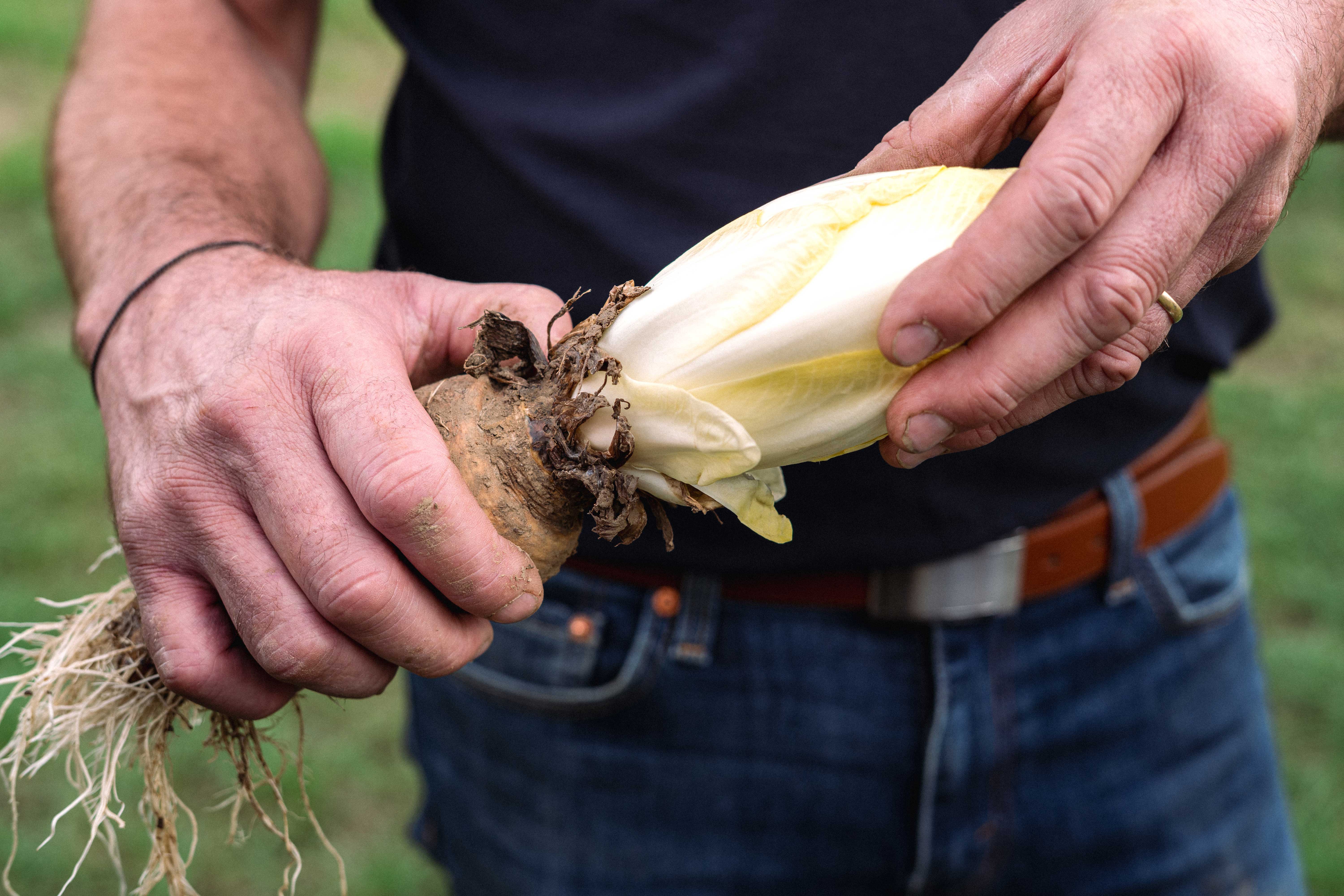
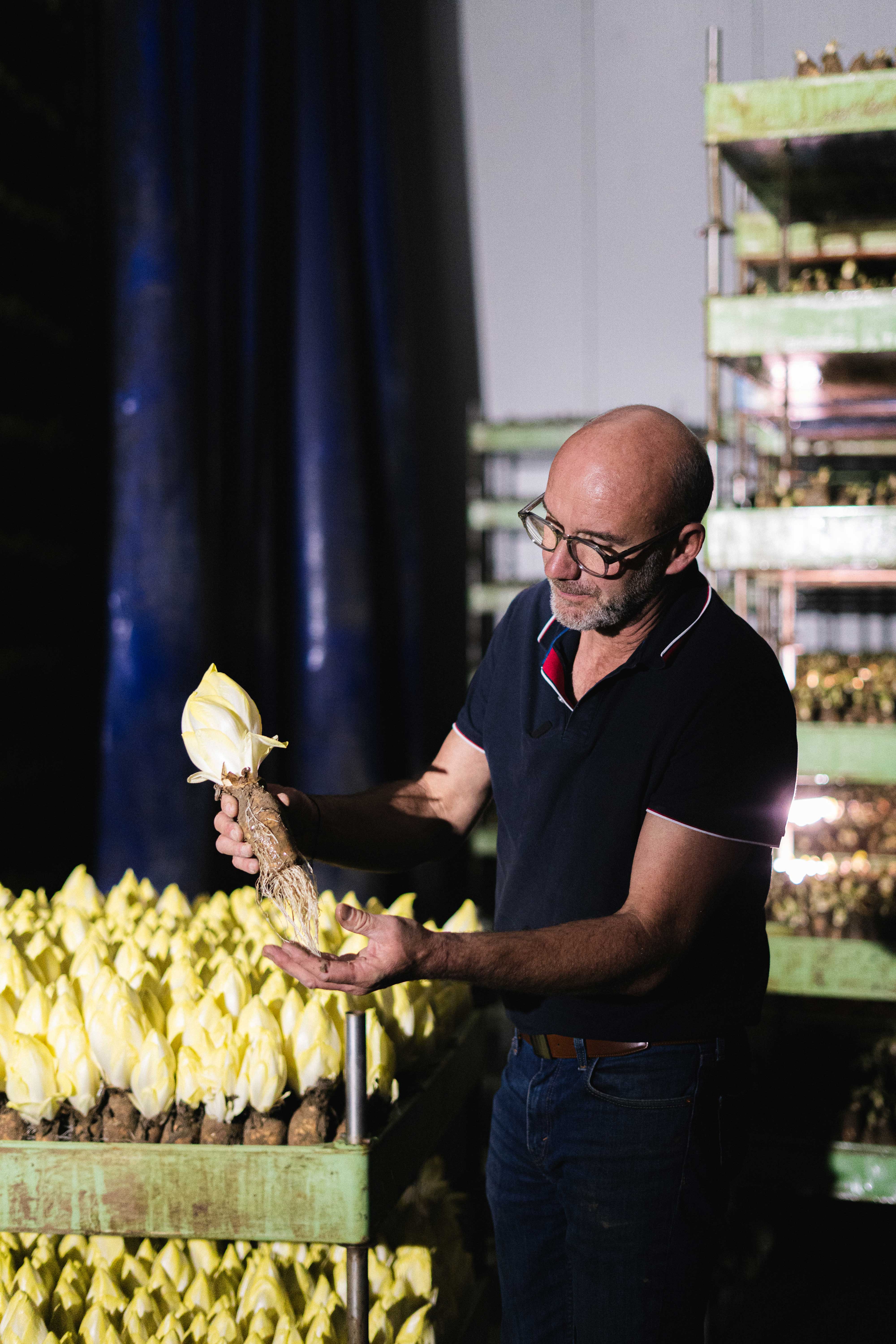
Once harvested, these roots are kept in cold storage before being replanted. “First, we grow the crop out in open fields, then we replant it in total darkness to produce the chicory head,” explains Philippe Brehon.
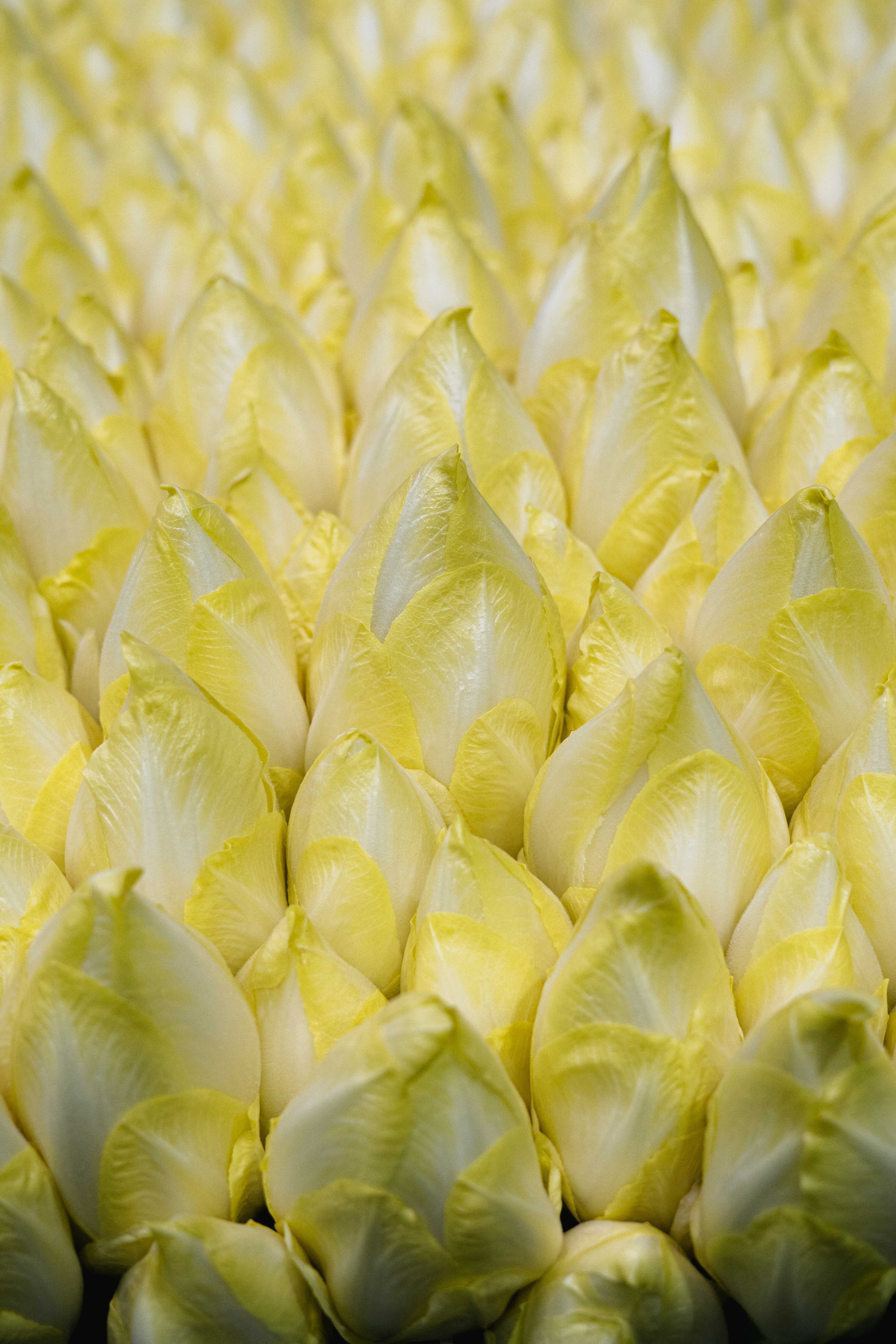
During this second crucial stage, the roots are placed in dark rooms where the temperature, humidity and watering are strictly controlled. This absence of light plays a crucial role. “Exposure to light would turn the chicory green and make it even more bitter. Darkness keeps it pale and crisp.”
Expertise in precision
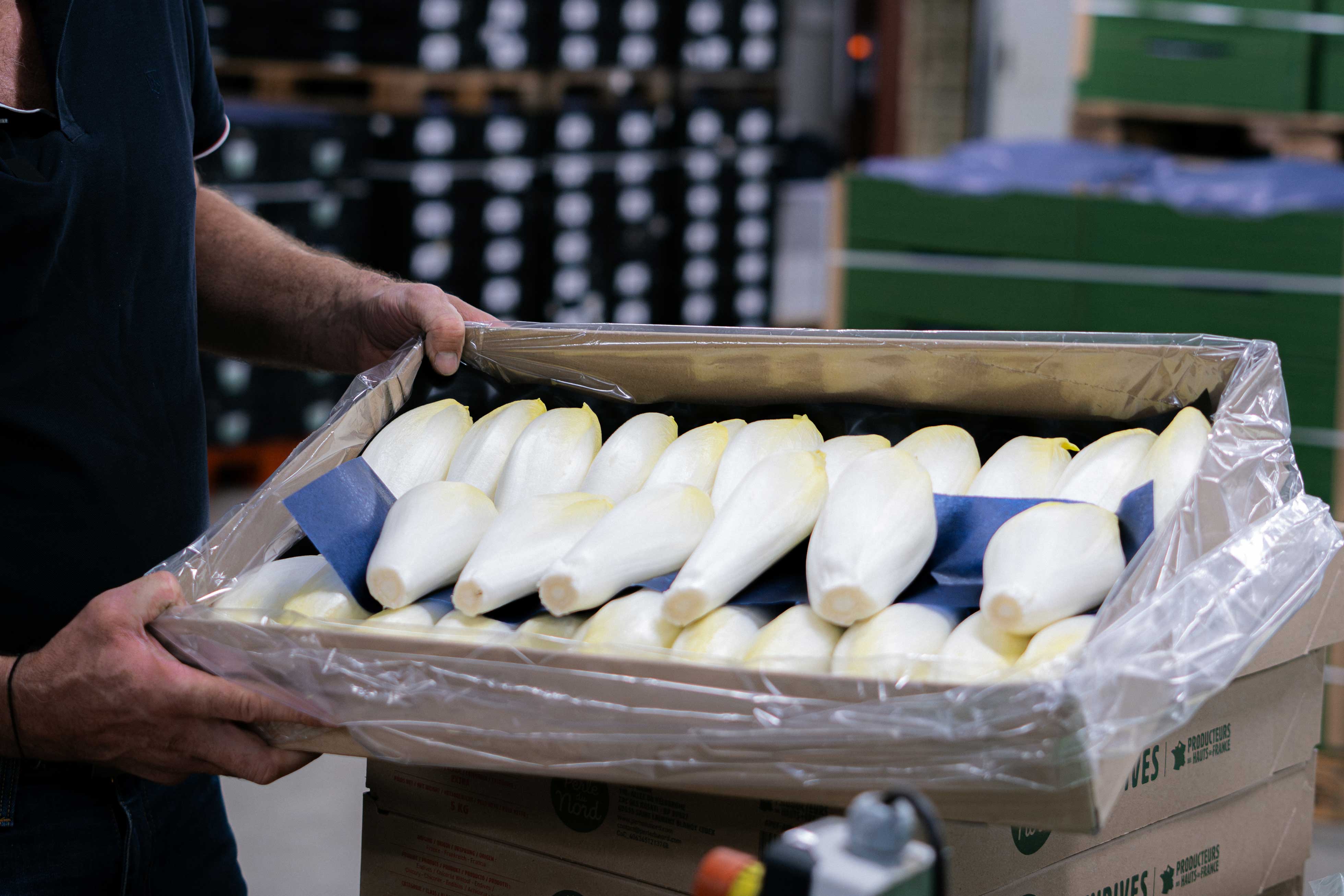
Although certain stages have been modernised over time, chicory production remains a trade that requires constant, watchful care. “There is still a lot of manual work involved, particularly when it comes to sorting and quality control”, the producer points out.
From temperature and humidity to water quality and growth rate: in the cultivation rooms, every single variable must be meticulously monitored to ensure a consistent yield. “The most critical factor is mastering the growing conditions.”
And for that, there’s no big secret – it all comes down to experience. “You have to understand how the plant behaves, know how to read it, and step in at just the right moment to maintain consistent quality.” This expertise and demand for precision go a long way in explaining why the French sector enjoys such a strong reputation. Philippe Brehon’s farm alone produces nearly 2,700 tonnes of chicory each year.
More than just a winter vegetable
While chicory is available year-round thanks to a tightly controlled production cycle, it remains deeply rooted in the French imagination as a winter staple. “Although available year-round, it is still eaten almost exclusively in autumn and winter in France,” explains the producer.
As temperatures drop, it takes centre stage at local markets and around family dinner tables. Winter brings peak demand, making it the busiest time of year for chicory growers.
Deeply rooted in French culinary tradition, chicory is far from stuck in the past. Over the years, growers have had to adapt by developing sweeter varieties to cater for evolving consumer tastes. “This has led to the arrival of mini chicories and cross-breeds between different chicory types, such as Carmine, Barbucine and Friseline,” explains Philippe Brehon.
On his farm, he also grows baby chicory, harvested young and “particularly popular as an appetiser or in gourmet dishes.”
A special place in French cuisine
Chicory is one of those ingredients that reflects not just a region, but a whole way of cooking. In northern France, it is inextricably linked to family recipes passed down through the generations.
Unsurprisingly, the classic endives au jambon – wrapped in ham, topped with béchamel, and baked until bubbling – remains the quintessential dish. But there is so much more you can do with it. “Whether in a salad with walnuts and cheese, braised with meat, roasted in the oven or simply served crisp as an appetiser, the chicory lends itself to a wide variety of dishes,” says Philippe Brehon. “It’s a simple, everyday vegetable, but it has plenty of character.”
After more than 20 years of growing chicory, his passion remains undimmed, matched only by the quiet thrill of seeing the season’s first harvest emerge. A sense of pride that reflects the enduring depth of this unique vegetable, which has grown over the years into one of northern France’s defining agricultural and culinary symbols.

Tags
On the same subject
MEET THE MAKERS
Chicory, the white jewel in the crown of northern France
In partnership with Fruit and Veg from France
MEET THE MAKERS
French potatoes: no ordinary treasure
In partnership with CNIPT - Potatoes from France

MEET THE MAKERS
Peaches: a source of French pride with a taste of summer
In partnership with Fruit and Veg from France
Most popular this week