French Food Facts that Sound Fake (but are Totally Real)
Great food often comes with great stories. The French culinary landscape is full of outlandish origins, unlikely competitions, and colorful characters. Here are some strange French food facts that sound fake, but are totally real. No April Fool’s jokes included, we promise.

For Centuries, the French Paid Taxes in Salt (and Got Pretty Good at Smuggling it, Too) 🧂
Dating back to the middle ages, the French monarchy exercised a monopoly on the sale of salt. Salt-producing regions were required to turn all of their salt over to the king, who then sold it back to his subjects at inflated prices. Maddening for French citizens, different regions of France had different taxation rates. Salt could be incredibly expensive in Paris, while in Brittany, home of the famous Sel de Guérande, it could be nearly tax free.
This uneven and aggressive tax burden led to all sorts of creative smuggling and contraband operations, including reports of women hiding salt under their dresses in false backsides. Anger around food and salt prices played a significant role in the circumstances that led to the French Revolution. Fun fact: the English word “salary” comes from the French term “salaire,” originally meaning a ration of salt.
The French Government Has Strict Rules Around What IS and ISN’T a Baguette 🥖
We all know what a baguette is… but what is it, really? The French government can tell you.
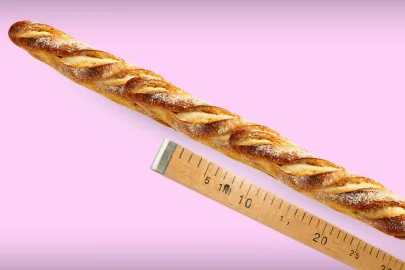
The quality and characteristics of France’s most famous bread are carefully regulated by national law, which governs the appropriate length, width, weight, and legally allowed proportion of ingredients. Industry “Label Rouge” standards go even further, ensuring the specific length, weight, and dimensions of anything passing for a “traditional” French baguette.
In case you were wondering: every baguette “de Tradition” sold in France must be between 50-60 cm long and 6 cm wide, weigh around 250 grams, and be made exclusively of four ingredients: Water, wheat flour, salt, and yeast.
Two Monks, Sworn to Secrecy, Guard the Recipe to this Famous French Spirit 🥃
Produced by Carthusian monks in the alpine regions of France for centuries, the recipe for the famous Green Chartreuse is a closely guarded secret. The heady, herbal liquor is still distilled under monastic supervision in the mountain town of Aiguenoire, and only two privileged members of the order know the recipe, passed down orally through generations.
Each monk prepares their portion of the recipe in solitude, preserving the complex blend of alpine herbs and diverse spices at its heart. Despite its worldwide popularity, these monks won’t be rushed. Shortages of the world-famous spirit are not uncommon.

A Random Kitchen Mistake is Responsible for this Legendary French Dessert 🥧
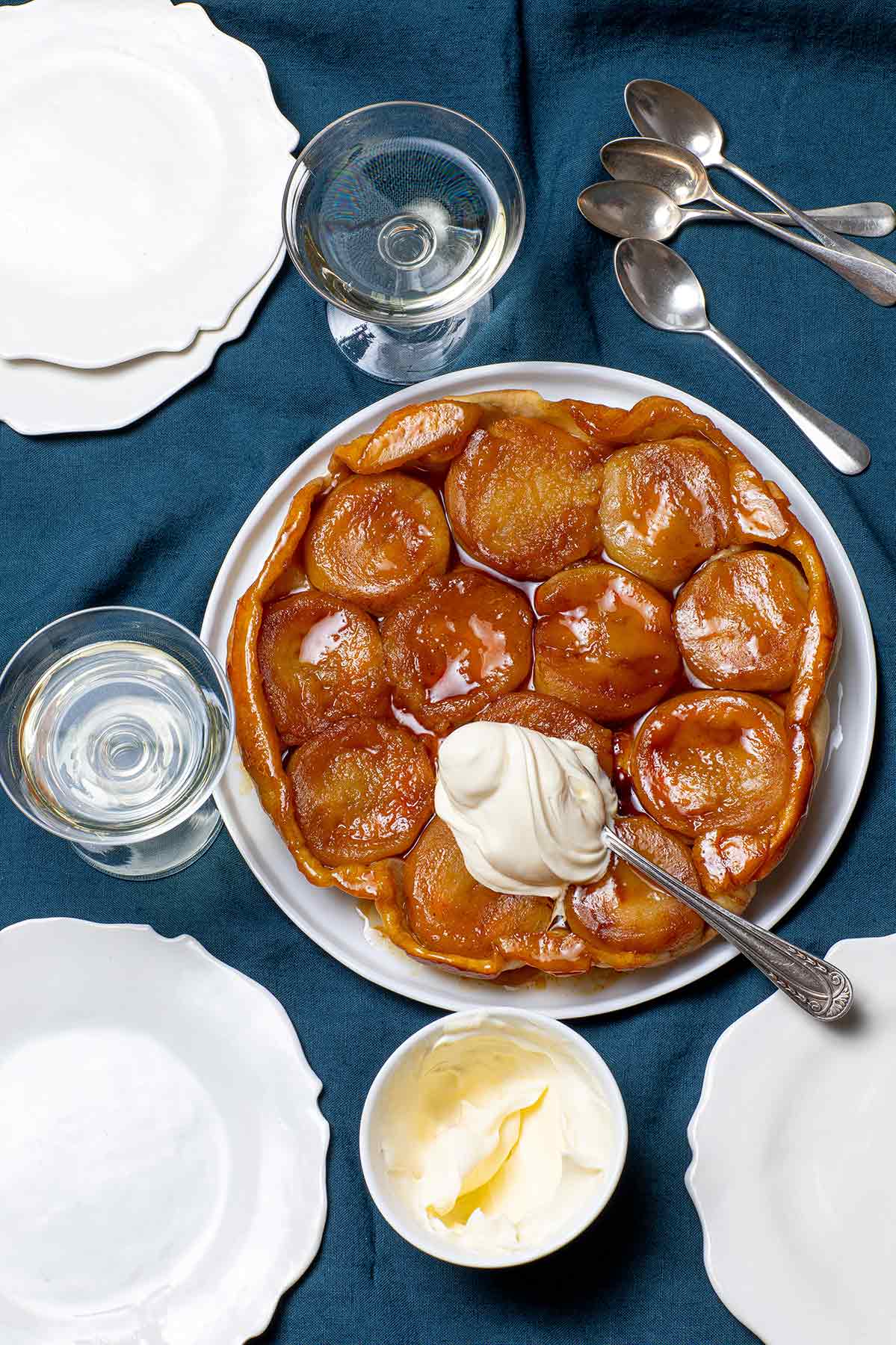
The Tarte Tatin, an upside-down apple pie beloved in French bistros and home kitchens alike, would have never come to prominence if it weren’t for a little mixup. Two sisters, Stephanie and Caroline Tatin, ran a roadside inn in the Loire valley in the late 1880s. As Stephanie told it, one busy morning she walked away from a pan of apples and butter, which started to burn on the stove. In an attempt to salvage the caramelized mess, she threw a round of pie dough right on top and stuck the whole thing in the oven.
The inn’s guests were charmed by the results and the Tarte “Tatin” was born. What began as a mistake is now a time-honored technique, and you’ll find a thousand variations that vary with the seasons. Savoury tarte tatin is popular too, with versions made from shallots, leeks, and endives.
Many food scholars and researchers would have us believe that upside-down pies existed in France long before Stephanie Tatin’s burnt pan of apples. Regardless, the origin story of the Tarte Tatin serves to honor various ways in which humble cooks and modest roadside eateries have contributed to the great gastronomic history of France.
There is a World Championship for Everything (and Yes, they are Very Serious) 🏅
Many of France’s agricultural products and signature dishes are supported by gastronomic brotherhoods and professional associations. To promote and transmit their culinary traditions, these groups will often hold annual festivals that feature tournaments to honor the best of the best producers in their category. But it’s not just an excuse to throw a great party- these serious, competitive tournaments are held to crown “world champions” across France, with glory, prize money, and sponsorships on the line.
You can fly to Bastia to compete in the World Jam Championships. Teams from as far away as Japan come every year to battle for the world championship of Paté en Croute in Lyon. And who could forget the World French Fries Championships, which draws massive rowdy crowds to the small city of Arras, in Normandy.
The French Hated Potatoes… Until One Man’s Potato Evangelism Changed Their Mind 🥔
Before about 1780, the idea of a national championship for pommes frites was unfathomable: the French wouldn’t even think of eating a potato. While widely adopted across Europe, rumors in France persisted that potatoes caused leprosy and were only fit for animal feed. The life’s work of pharmacist and agronomist Antoine Auguste Parmentier slowly brought the country to its senses.
Parmentier promoted potatoes as an important solution to the recurring famines and persistent hunger that plagued pre-revolutionary France. He set about changing the narrative with a number of attention-grabbing gestures, including posting armed guards to patrol his potato patches, giving bouquets of potato flowers to Louis XVI and Marie Antoinette, and hosting lavish banquets full of potato dishes for Paris luminaries including American ambassador Benjamin Franklin.
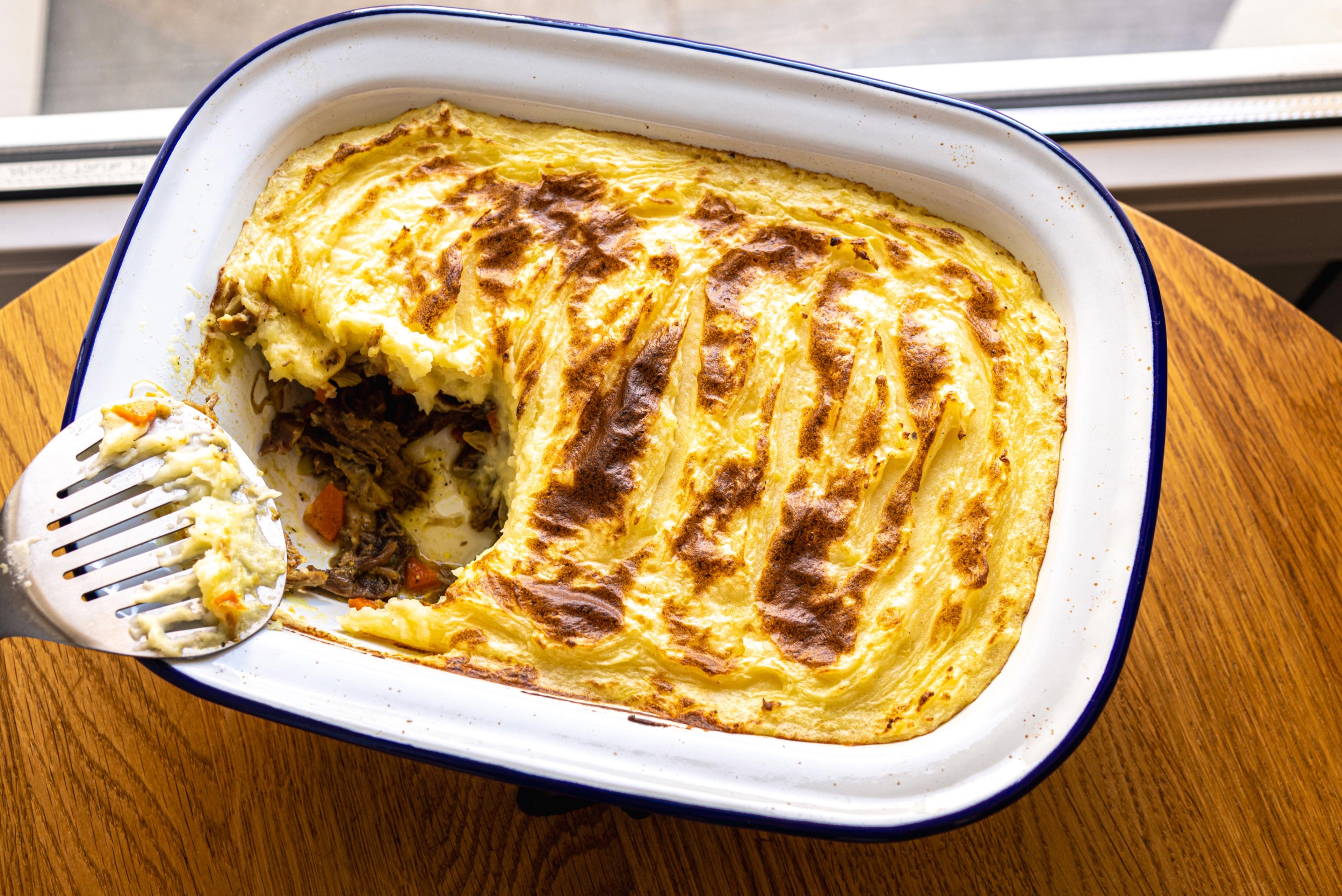
Parmentier’s potato evangelism is remembered in the name of many French dishes, like Hachis Parmentier, a type of shepherd’s pie, or Salade Parmentier, a traditional French potato salad. You can visit his tomb at Paris’ famed Pere Lachaise cemetery, where his tomb is often ringed with – you guessed it – potato plants.
These stories illustrate that the French cuisine we know today is not solely a white tablecloth affair. It’s been influenced by generations of passionate and colorful characters. Use these stories to impress your friends at your next apéro, though we can’t promise they’ll believe you!
Contributor
Christian Letourneau
Cook & writer
On the same subject

Most popular this week