
A staple of French cuisine, potatoes are a versatile and beloved ingredient found in kitchens across the country. From rustic countryside dishes to refined gastronomy, French potatoes reflect the richness of regional terroirs and culinary traditions. As Europe’s second-largest producer and the world’s leading exporter, France offers an exceptional diversity of potato varieties, each suited to specific cooking methods and recipes.
What you need to know
Although now a cornerstone of French cuisine, the potato was once viewed with suspicion in France after its arrival from South America in the 16th century. Its fortunes changed in the 18th century thanks to pharmacist and agronomist Antoine-Augustin Parmentier, who cleverly staged its rise to fame – most notably by posting armed guards around his potato fields to spark curiosity and make the crop seem valuable (a story often cited among France’s most surprising culinary facts). The strategy worked, and the potato soon found its place on French tables.
Potatoes are now inseparable from French cuisine, featured in iconic dishes such as gratin dauphinois, hachis parmentier, aligot, tartiflette or the famous French fries! Around two-thirds of French production comes from the Hauts-de-France region, although potatoes are grown across many regions, including Grand Est, Centre Val de Loire, Normandy and Brittany, contributing to a wide range of flavours and textures.
Choosing the right potato for the right dish is essential. Whether you’re preparing a silky purée, crispy roasted potatoes or a potato salad, the type you select will make all the difference. French potatoes are typically classified into four main culinary categories:
- Steaming / sautéing (waxy potatoes with firm flesh) – Ideal for boiling, steaming or pan-frying. Their firm flesh holds its shape well during cooking.
- Baking / purée (floury potatoes) – Ideal for oven-baking, mashing, soups and gratins. Their flesh becomes soft and fluffy when cooked, making them perfect for purée and comforting dishes.
- Potatoes for frying – Especially suited for making French fries, these varieties absorb little oil and produce golden, crispy results without becoming overly sweet.
- Grenaille potatoes – A French speciality, grenailles are small-sized potatoes with firm flesh that are traditionally cooked whole, skin on. Their small size allows for quick and even cooking, whether steamed, sautéed, or roasted.
Characteristics

Look
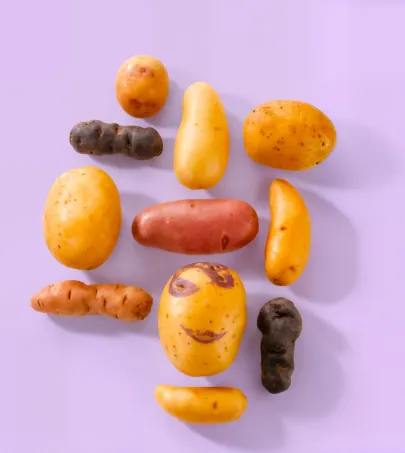
French potatoes come in a wide variety of shapes, sizes, and colours – from small, round grenailles to larger oval varieties. Their skin comes in a range of colours, from pale yellow to red and violet, depending on the variety.

Taste
Their flavour varies depending on the variety, from subtly sweet and nutty to rich and earthy. Firm-fleshed potatoes tend to have a more refined taste, while floury varieties offer a comforting, melt-in-the-mouth texture.
Nutritional benefits
Contrary to popular belief, potatoes are naturally low in calories, containing about 78% water and very little fat (around 0.3%). They are:
- A valuable source of energy, thanks to their starch content
- Rich in around twenty minerals, including potassium (which contributes to normal muscle and heart function)
- One of the few starchy foods to contain vitamin C
- Naturally gluten-free, making them suitable for gluten-free diets
Cooking potatoes with their skin helps preserve their vitamins and minerals.
Editor's note
« Not sure which French potato is the right one for your dish? It’s simple: in supermarkets, the recommended use is usually indicated on the packaging. At your local greengrocer’s, don’t hesitate to ask for advice – they’ll be happy to guide you! »
How to use
Storage
Store potatoes in a cool, dark place at an ideal temperature between 6–8°C. Keeping them away from light helps prevent greening, while cool storage slows down sprouting. Avoid storing potatoes at excessively low temperatures, especially those intended for frying, as the cold can convert starch into sugar and affect cooking results. Placing an apple among your potatoes can also help delay sprouting.
Preparation
- Always wash potatoes thoroughly before use. Peeling is optional, depending on the recipe.
- For boiling, start in cold salted water to ensure even cooking.
- To check whether potatoes are cooked, insert the tip of a knife – if it slides in easily, they're ready!
Recipes with this product
Mix & Match
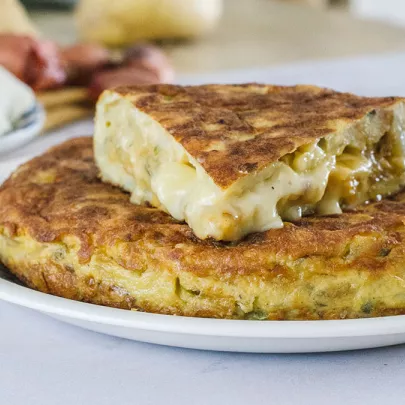
Spanish Tortilla Filled With Reblochon Cheese
In partnership with CNIPT - Potatoes from France
Fruits & Vegetables