

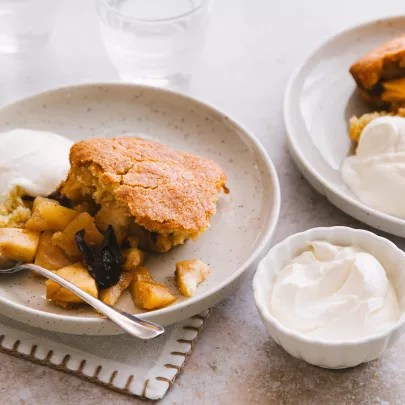
In autumn and winter, apples are in season and what better way to make the most of them than by baking a delicious apple cake? There are many versions but this apple cake with Calvados PDO might be one of our favourites. Calvados, a traditional French apple brandy from Normandy, has a rich, complex flavour that perfectly complements the apples in the cake. The final touch of crème fraîche, though optional, adds a sharp and fresh finish to this classic French apple cake recipe. Bon appétit!
Preparation time
15 min
Ingredients For
-
400 g (peeled and cored and sliced into thick chunks)
-

-
225 g
-
1 tsp
-
1 tsp
-
225 g
-
x 2
-

-
30 g
-

Preparation
1
Preheat the oven to 160C/fan 140C/gas 3. Lightly grease a deep 20cm loose-bottomed cake tin.
2
In a large mixing bowl, combine the flour, baking powder, sugar, salt and whisk until combined.
3
Then add the eggs, melted French butter and Calvados PDO and mix until smooth.
4
Spread half this mixture in the prepared tin.
5
Pile up the chopped apples in the centre of the cake tin.
6
Spoon the remaining mixture over the apples, making sure that the mixture covers the centre. Sprinkle with the flaked almonds.
7
Bake in the preheated oven for 1 hour and 15 minutes or until golden. Check it’s done by inserting a cocktail stick into the centre of the cake, if it comes out clean it’s ready.
8
Slice up and serve with a generous dollop of French crème fraîche on the side.
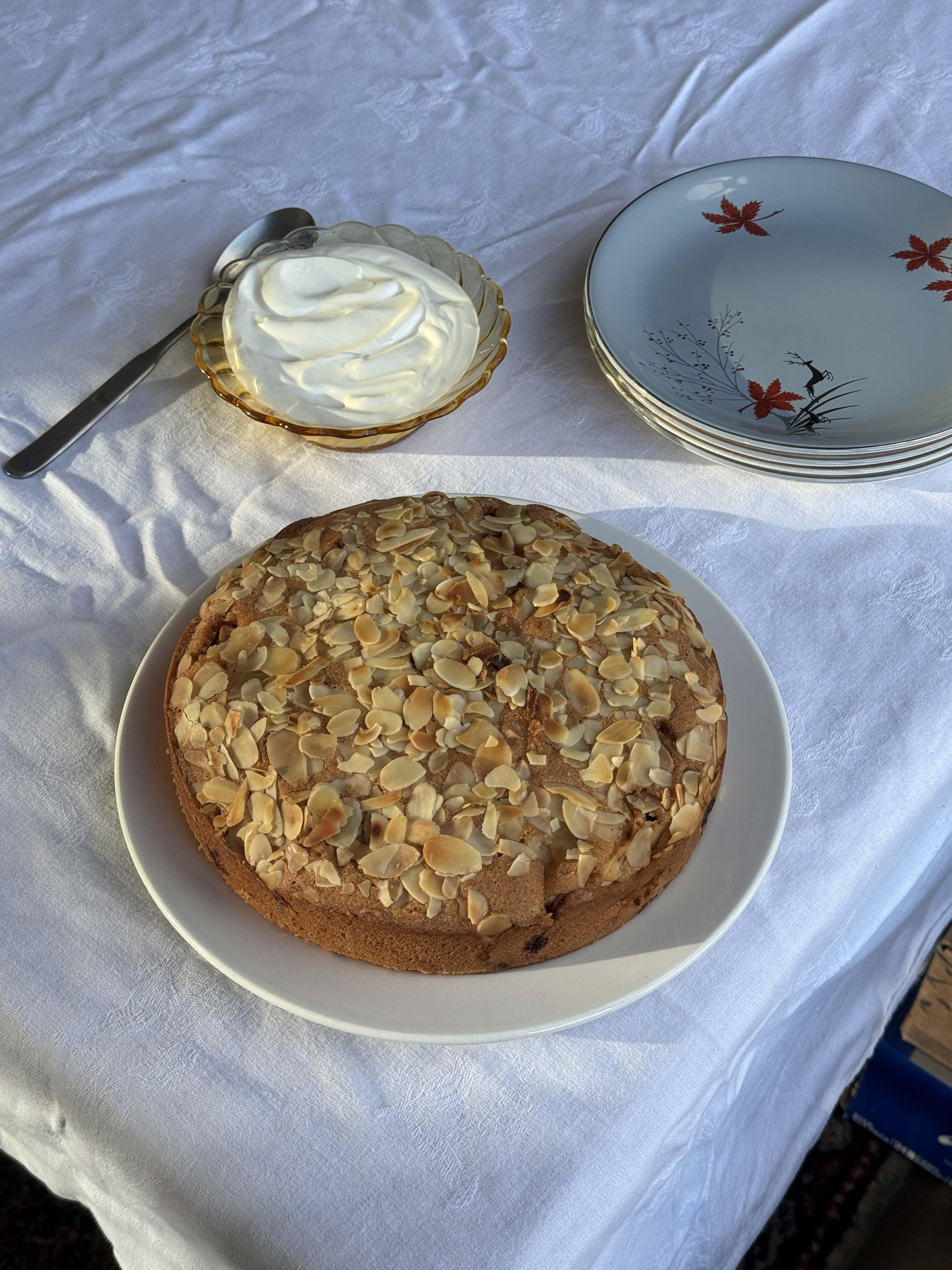
© Rosie Kellett
Contributor

Rosie Kellett
Food blogger
You might also like
French Desserts
French apple tart with salted butter caramel
In partnership with Fruit and Veg From France

Our latest recipes

French Desserts
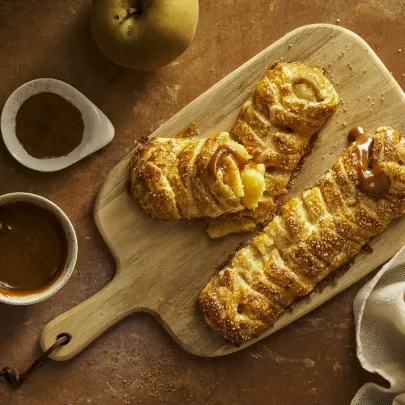
Chaussons aux pommes (French Apple Turnovers)
In partnership with Fruit and Veg from France

Most popular this week