We went to visit Paul-Henry Gosselin, a Normandy farmer who grows carrots along the coast of the Cotentin peninsula. Mr Gosselin’s carrots are more than just vegetables: each one is a story of patience, technique and knowledge handed down through generations. Pairing simplicity with high standards, they remind us that French agricultural excellence comes from the land, the rhythms of the weather and everyday care.
Just a few miles down the road from Barfleur, on an outcrop of Normandy swept over by sea air, Paul-Henry tends to his carrots with the quiet conviction of those who know exactly why they do their job. He grew up here, he learned here, and it is here that he continues a family trade with deep-rooted foundations. “We love this work because it reflects who we are. It’s a mix of precision, technique and passion.”
A vegetable shaped by the land
In the Val de Saire, carrots can express their full potential: the light soil, mild climate and proximity to the sea all come together to create unique growing conditions. “Here, the carrots are well protected in the open fields thanks to the natural conditions. The earth, the weather — everything has an effect on the flavour and quality.”
This notion of identity is one the farmer fully embraces; like a fine wine or cheese, the carrot carries the identity of its terroir. “You can grow the same variety in Réville, Les Landes or somewhere else, but it won’t be the same carrot. The soil changes everything.”
From seed to bunch: an expert craft
Seed planting begins in March and continues in phases until June. “It’s a crop that requires a great deal of preparation, equipment and precision. It’s a real craft.”
Preparing the mounds is a key step, as here the seeds are not planted in flat rows:
– the mounds are shaped,
– the seeder is passed over the mounds,
– seeds are planted every ten centimetres along the top.
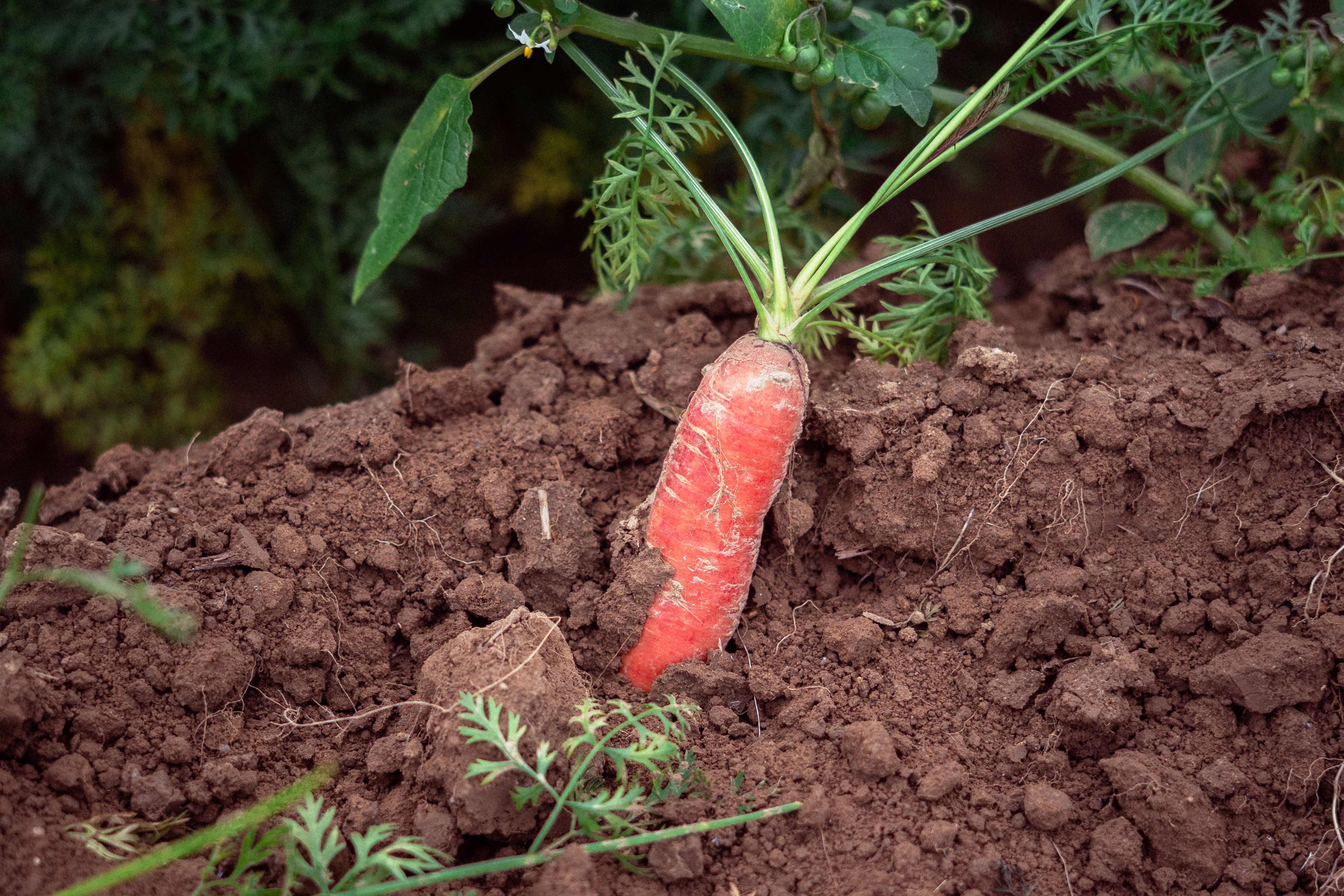
This technique is used in order to help protect the carrots: in winter, water accumulates at ground level, so keeping the carrots elevated limits the risk of rot. It looks simple, but it’s essential to the quality of the finished product.
When the time comes to check whether the carrot has reached maturity, Mr. Gosselin looks for a specific detail: “An unripe carrot has a pointed end, almost like a pencil. A carrot that’s ready has a smooth, rounded end.”
A structured mechanical harvest
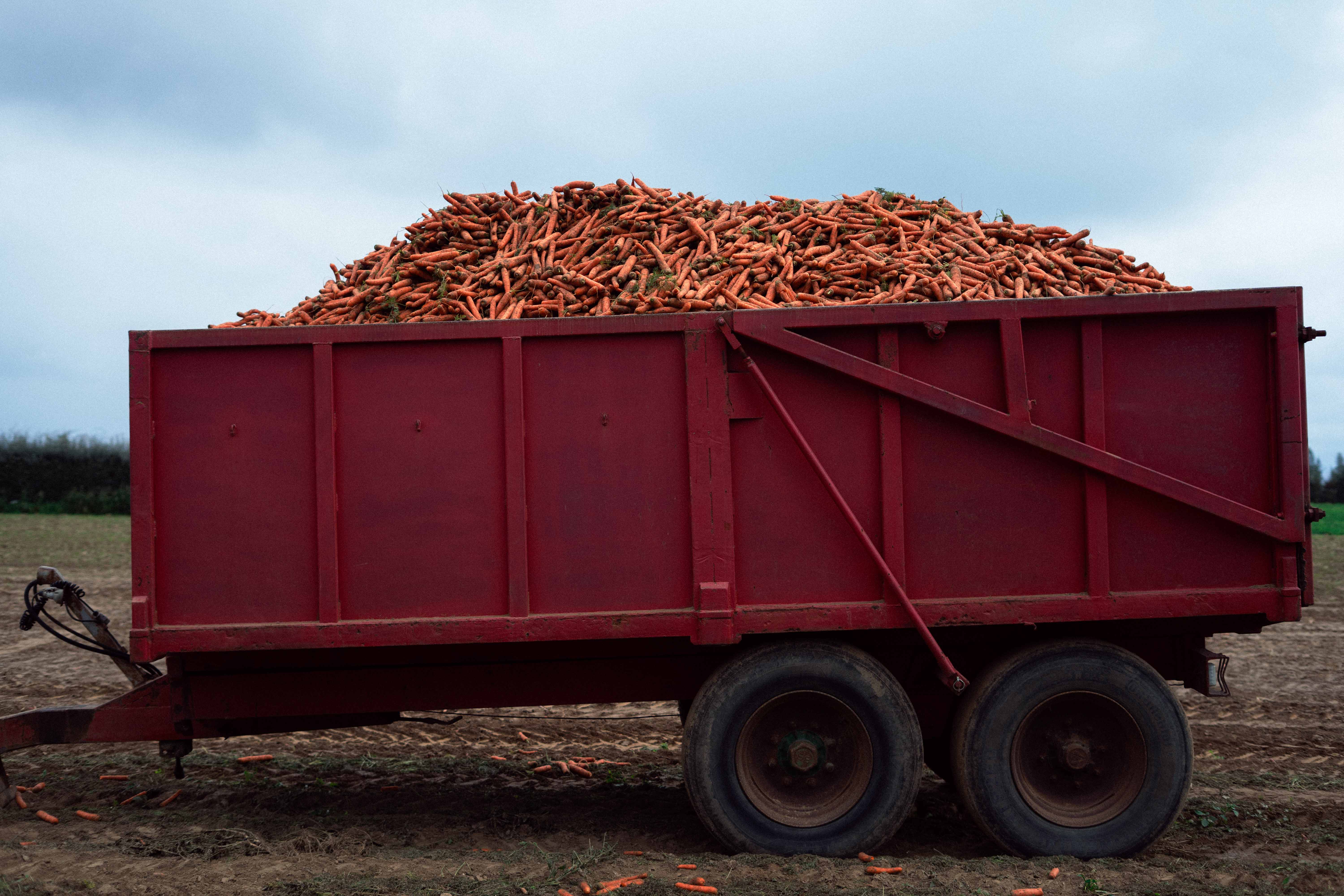
The harvest takes place over a short and intense period: October, November and December, right when the carrots achieve their full potential.
The uprooting is a mechanical process with a strict protocol:
– the machine takes hold of the carrots by their stems,
– the leaves are cut off at the tip,
– the carrots fall into the hopper, before being conveyed to the trailer.
This fine-tuned process is designed to preserve the vegetables and their freshness.
Robust French production with recognised expertise
On average, France produces 380,000 tonnes of carrots per year across 15,000 hectares. This makes it a heavyweight in European production, driven by some of the strictest quality and traceability standards. Paul-Henry is proud of this fact, though he speaks without hyperbole: “We take our work seriously, and we respect the land. We know what we’re doing.”
Having adopted the HEV (High Environmental Value) approach via his cooperative, he emphasises the importance of sustainable practices: preserving water, controlling impact, and protecting resources, with a sense of continuity that is consistent with his line of work.
A simple yet premium product
Carrots are sometimes thought of as a “basic” vegetable; however, their diversity, delicacy and variety of uses speak to the contrary. With their sweet, delicate flavour, carrots are enjoyed by both children and adults. Certain varieties — notably Label Rouge or hand-picked sandy soil carrots — reflect a level of care that remains widely unknown.
For our farmers, the flavour remains the most important element. “When you bite into a really fresh carrot, you know straight away if the work has paid off.”
Harvest time: the moment of truth
If Paul-Henry had to pick his favourite day of the year, it would be this one: the harvest. “It’s our Holy Grail; the moment it all comes down to. You see the result of several months of work.”
This is also what drives him: feeding people, passing on his knowledge and carrying on these traditions. “This isn’t an easy job, but it’s a labour of love. We do it for the right reasons.”
In the fields of Réville, between the fertile black soil and the pale Normandy sun, Paul-Henry’s carrots tell this same story: a product that is humble, yet noble; an expression of the land, and the quiet pride of those who cultivate excellence without the need for fanfare.

Tags
On the same subject
MEET THE MAKERS
French carrots: pride and passion for the land
In partnership with Fruit and Veg from France
MEET THE MAKERS
The fabulous destiny of French oysters
In partnership with Comité National de la Conchyculture
MEET THE MAKERS
Kiwi berry – a little fruit with big potential
In partnership with Fruit and Veg from France
Most popular this week